


AI goes next level with Mass-Production of the Infrastructure of AI.
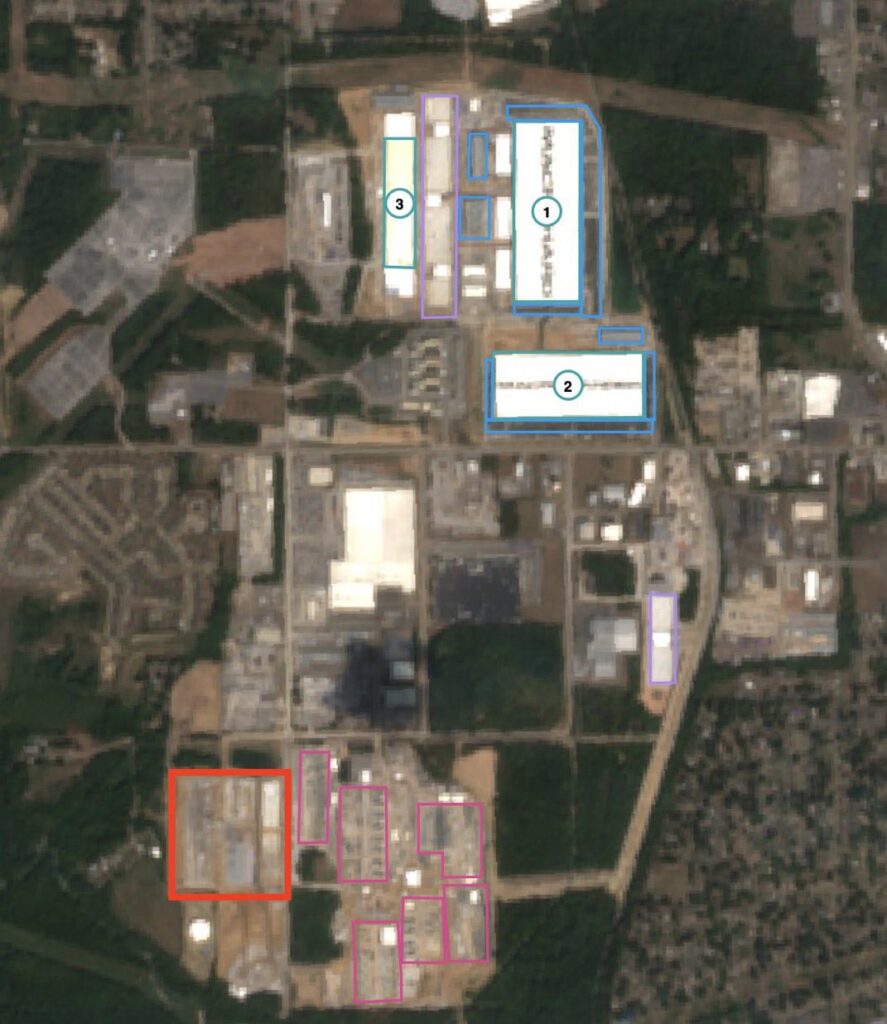
SpaceX’s most consequential new product is giant AI data center completed every month.
A single enormous computing facility is impressive. A mass production system will change EVERYTHING.
One completed every month changes the equation.
Others spend years building one exceptional facility. Reliably completing one or more a month means solving ALL bottlenecks.
Several sites are underway simultaneously, each at a different stage.
We have mass-produced enormous, complex machines before.
During World War II, American shipyards demonstrated that size and complexity did not prevent industrial repetition.

Kaiser’s Casablanca-class program produced 50 escort carriers. Each carried approximately 28 aircraft. USS Munda, the final ship of the class, went from keel laying on March 29, 1944, to commissioning on July 8—101 days.
These were escort carriers, not the larger Essex-class fleet carriers. The useful comparison is the production method. Repeated designs, prefabricated sections, coordinated suppliers, and parallel work.
The lesson for AI infrastructure is powerful. Once a design becomes repeatable, the important measure shifts from the achievement of one project to the output of the whole production system.
The factory includes everything needed to switch on the computers.
A completed shell is not an operating AI data center.
Power delivery, substations, cooling, servers, networking, software, and commissioning all have to come together. A delay in any one can leave expensive equipment waiting.
Standardization could reduce the engineering and coordination work that must be repeated at each site. Teams can reuse layouts, procurement specifications, installation procedures, and lessons from earlier deployments.
But the test is operational. How much capacity is energized, commissioned, available to customers, and earning revenue?
That is what separates a construction announcement from a functioning industrial advantage.
Brian Wang is a Futurist Thought Leader and a popular Science blogger with 1 million readers per month. His blog Nextbigfuture.com is ranked #1 Science News Blog. It covers many disruptive technology and trends including Space, Robotics, Artificial Intelligence, Medicine, Anti-aging Biotechnology, and Nanotechnology.
Known for identifying cutting edge technologies, he is currently a Co-Founder of a startup and fundraiser for high potential early-stage companies. He is the Head of Research for Allocations for deep technology investments and an Angel Investor at Space Angels.
A frequent speaker at corporations, he has been a TEDx speaker, a Singularity University speaker and guest at numerous interviews for radio and podcasts. He is open to public speaking and advising engagements.
