

Close Menu

    Subscribe to Updates

    Get the latest Tech news from SynapseFlow

    What's Hot

    Weekly poll: do touchscreens on laptops make sense?

    November 1, 2026

    MIT student builds modular ‘Keybytes’ magnetic keyboard, but a full layout will cost you a fortune

    November 1, 2026

    Drupal Commerce Core Vulnerability Exploited Against Online Stores 

    November 1, 2026
    Facebook X (Twitter) Instagram
    • Homepage
    • About Us
    • Contact Us
    • Privacy Policy
    Facebook X (Twitter) Instagram YouTube
    synapseflow.co.uksynapseflow.co.uk
    • AI News & Updates
    • Cybersecurity
    • Future Tech
    • Reviews
    • Software & Apps
    • Tech Gadgets
    synapseflow.co.uksynapseflow.co.uk
    Home»Tech Gadgets»MIT student builds modular ‘Keybytes’ magnetic keyboard, but a full layout will cost you a fortune
    MIT student builds modular ‘Keybytes’ magnetic keyboard, but a full layout will cost you a fortune
    Tech Gadgets

    MIT student builds modular ‘Keybytes’ magnetic keyboard, but a full layout will cost you a fortune

    The Tech GuyBy The Tech GuyNovember 1, 2026No Comments3 Mins Read0 Views
    Share
    Facebook Twitter LinkedIn Pinterest Email
    Advertisement


    Follow us

    Advertisement

    Add us as a preferred source on Google


    Subscribe to our newsletter


    • Keybytes lets users assemble custom keyboards from magnetically connected individual keys
    • Every Keybit contains its own RISC-V microcontroller for individual key operation
    • A full-size Keybytes configuration could cost approximately $900 to assemble

    MIT student Nathan Alspaugh has developed Keybytes, an open source keyboard project that lets users create custom layouts by connecting individual keys to a central controller.

    The design uses magnetic connections and dedicated microcontrollers to support flexible arrangements.

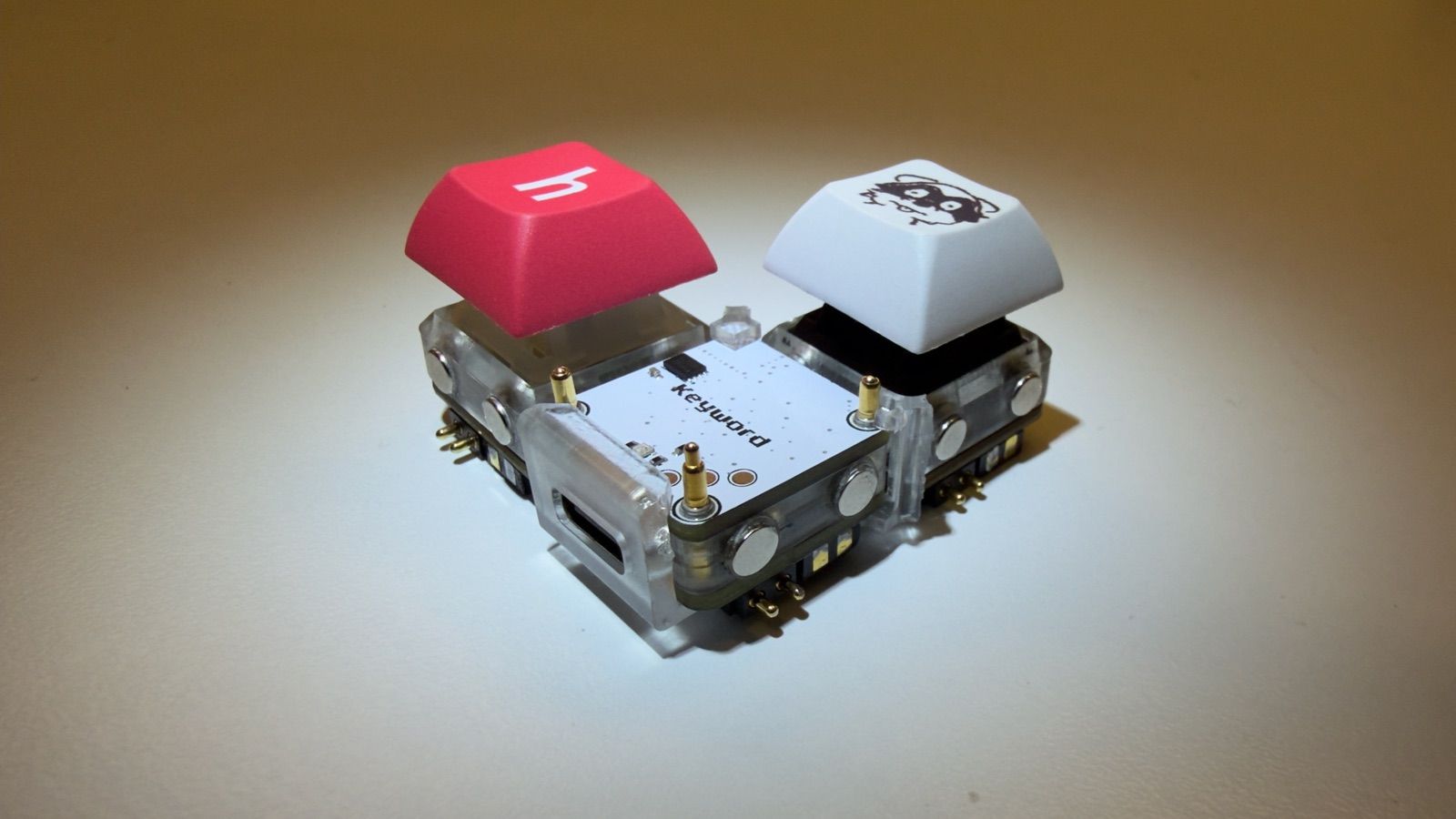
    Keybytes consists of two main elements: the Keyword controller and individual Keybit modules, which connect magnetically to form a personalised keyboard.

    Latest Videos FromTechRadar

    Magnetic keys allow custom layouts

    Each Keybit contains a RISC-V microcontroller, allowing individual keys to operate independently rather than relying entirely on one central processor.

    Every Keybit measures 19.05 x 19.05mm, corresponding to a standard 1U keyboard unit.


    You may like

    Its four-sided pogo pin connections carry power and I2C communications, allowing modules to connect through different edges and accommodate varied arrangements.

    The central Keyword module contains two stacked circuit boards, with an Arm Cortex M4 microcontroller.

    Sign up to the TechRadar Pro newsletter to get all the top news, opinion, features and guidance your business needs to succeed!

    The Keyword controller contains two stacked circuit boards, with its upper board housing an Arm Cortex-M4 microcontroller, a Bluetooth antenna and flash memory.

    Its lower board provides USB-C connectivity, charging functions and a buck-boost converter for power management.

    Each Keybit accommodates a Cherry MX mechanical switch, giving builders the option of selecting compatible switches for their preferred typing experience.


    What to read next

    The magnetic connections allow keys to attach around the Keyword controller or alongside other modules, removing the fixed layout restrictions found in conventional keyboards.

    Alspaugh has published the project files, design assets and construction details on GitHub under the permissive MIT licence.

    This allows others to examine the design, build their own units and modify the hardware according to their requirements.

    Building a full keyboard could cost $900

    Despite its flexibility, Keybytes remains an early-stage project, with Alspaugh reporting that the basic system had only recently reached a working state.

    Publicly available project documentation currently shows limited combinations of modules rather than a completed, full-size keyboard layout.

    The developer estimated that assembling a full-size version using approximately 2 Keyword controllers and 110 Keybits would cost around $900.

    That figure indicates how quickly expenses could accumulate when each additional key requires its own circuit board, microcontroller, and other electronic components.

    Builders must also account for printed circuit board production, component purchases, soldering, and custom 3D-printed enclosures.

    These requirements could make large layouts considerably more demanding than smaller configurations designed around a handful of shortcuts.

    The current design also has limitations in its lighting options, since the Keyword includes a status indicator while individual Keybits lack dedicated illumination.

    Future versions could add features such as customisable RGB lighting, rotary controls, fingerprint recognition modules or a compatible touchpad. These remain proposed additions rather than confirmed developments.


    Google logo on a black background next to text reading 'Click to follow TechRadar'

    Follow TechRadar on Google News and add us as a preferred source to get our expert news, reviews, and opinion in your feeds.

    Advertisement
    Share. Facebook Twitter Pinterest LinkedIn Tumblr Email
    The Tech Guy
    • Website

    Related Posts

    Nothing Phone (4a), (4a) Pro, (3a), and (3a) Pro are now receiving the stable update to Android 17

    October 31, 2026

    The Anker MagGo Power Bank 2 Pro is great, but not for Android

    October 31, 2026

    Your 4K UHD Blu-ray player has an expiration date

    October 31, 2026

    How to watch Pakistan vs Sri Lanka: free cricket live stream

    October 31, 2026

    Apple iPhone 18 Pro vs. iPhone 18 Pro Max

    October 30, 2026

    OpenAI caves to backlash and reverses course on reducing ChatGPT usage limits

    October 30, 2026
    Leave A Reply Cancel Reply

    Advertisement
    Top Posts

    You don’t need a NAS to self-host — I proved it with hardware from my closet

    June 7, 2026394 Views

    Spotify is giving one of its best playlists a big visual upgrade to give subscribers ‘a closer connection’ to its New Music Friday curators — and I think it could be the update it’s always needed

    June 12, 2026212 Views

    The iPad Air brand makes no sense – it needs a rethink

    October 12, 202518 Views
    Stay In Touch
    • Facebook
    • YouTube
    • TikTok
    • WhatsApp
    • Twitter
    • Instagram
    Advertisement
    About Us
    About Us

    SynapseFlow brings you the latest updates in Technology, AI, and Gadgets from innovations and reviews to future trends. Stay smart, stay updated with the tech world every day!

    Our Picks

    Weekly poll: do touchscreens on laptops make sense?

    November 1, 2026

    MIT student builds modular ‘Keybytes’ magnetic keyboard, but a full layout will cost you a fortune

    November 1, 2026

    Drupal Commerce Core Vulnerability Exploited Against Online Stores 

    November 1, 2026
    categories
    • AI News & Updates
    • Cybersecurity
    • Future Tech
    • Reviews
    • Software & Apps
    • Tech Gadgets
    Facebook X (Twitter) Instagram Pinterest YouTube Dribbble
    • Homepage
    • About Us
    • Contact Us
    • Privacy Policy
    © 2026 SynapseFlow All Rights Reserved.

    Type above and press Enter to search. Press Esc to cancel.

    Ad Blocker Enabled!
    Ad Blocker Enabled!
    Our website is made possible by displaying online advertisements to our visitors. Please support us by disabling your Ad Blocker.