

Close Menu

    Subscribe to Updates

    Get the latest Tech news from SynapseFlow

    What's Hot

    Kodak’s viral Charmera camera just got a Y2K redesign

    June 17, 2026

    ‘AI traffic is fundamentally changing how the Internet operates’: New report claims bot traffic is growing 6.5 times faster than human users — is this the end of the useful internet as we know it?

    June 17, 2026

    Webinar Today: How Modern Breaches Bypass MFA and Evade Detection

    June 17, 2026
    Facebook X (Twitter) Instagram
    • Homepage
    • About Us
    • Contact Us
    • Privacy Policy
    Facebook X (Twitter) Instagram YouTube
    synapseflow.co.uksynapseflow.co.uk
    • AI News & Updates
    • Cybersecurity
    • Future Tech
    • Reviews
    • Software & Apps
    • Tech Gadgets
    synapseflow.co.uksynapseflow.co.uk
    Home»Future Tech»Moon Astronaut Captures Shot of Earth That Lets You See Its Thin Atmosphere Perfectly
    Moon Astronaut Captures Shot of Earth That Lets You See Its Thin Atmosphere Perfectly
    Future Tech

    Moon Astronaut Captures Shot of Earth That Lets You See Its Thin Atmosphere Perfectly

    The Tech GuyBy The Tech GuyApril 8, 2026No Comments2 Mins Read0 Views
    Share
    Facebook Twitter LinkedIn Pinterest Email
    Advertisement


    Sign up to see the future, today

    Advertisement

    Can’t-miss innovations from the bleeding edge of science and tech

    On December 7, 1972, NASA astronaut and Apollo 17 crew member Harrison Schmitt took a stunning photo of the entirety of the Earth, an image later dubbed “The Blue Marble.”

    The iconic shot was made possible by the mission’s unusual trajectory, which brought much of our world’s south pole into view. The astonishing perspective changed the “way we look at our home planet,” as the space agency notes on its website.

    And while Apollo 17 was the last time we set foot on the Moon’s surface, we finally have a non-satellite-image-based update to the photo over half a century later.

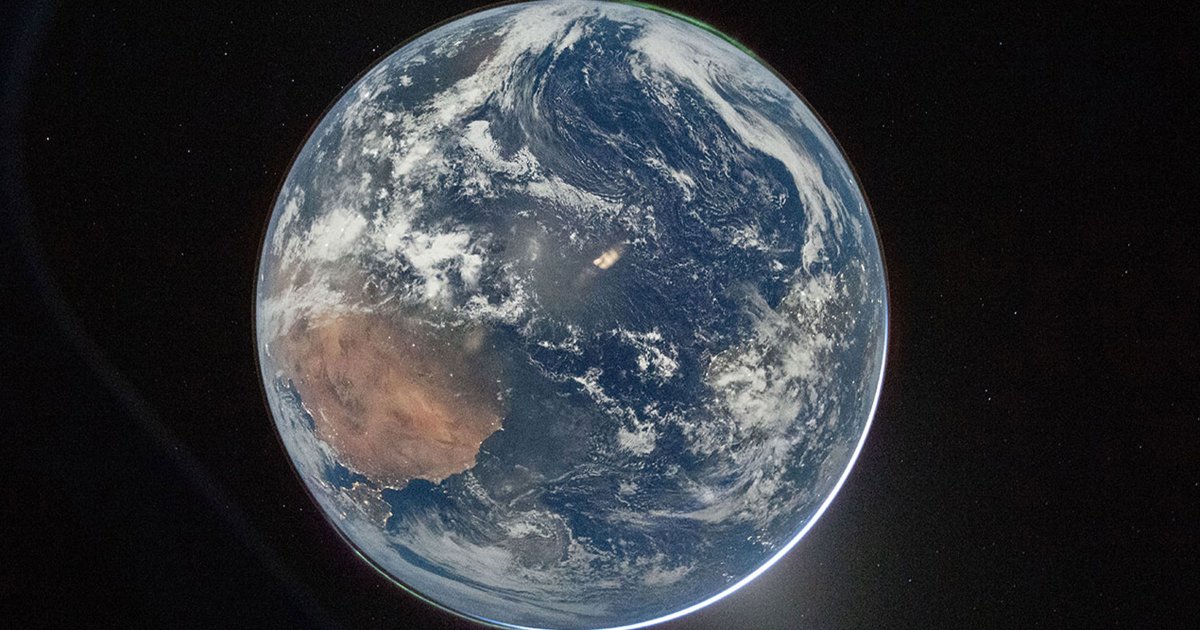
    After their Orion spacecraft fired its thrusters to take the crew of NASA’s ongoing Artemis 2 mission away from Earth on April 2, NASA astronaut and commander Reid Wiseman took a moment to snap a breathtaking photo of our world .

    The image, titled “Hello, World,” even shows the boundary of Earth’s atmosphere in remarkable detail — including not just one but two auroras visible in the top right and bottom left, they appear as faint green hues.

    It’s a stark reminder of the frail layer of gases that allows life to exist on Earth, a feature that may — or may not — make us unique in the universe.
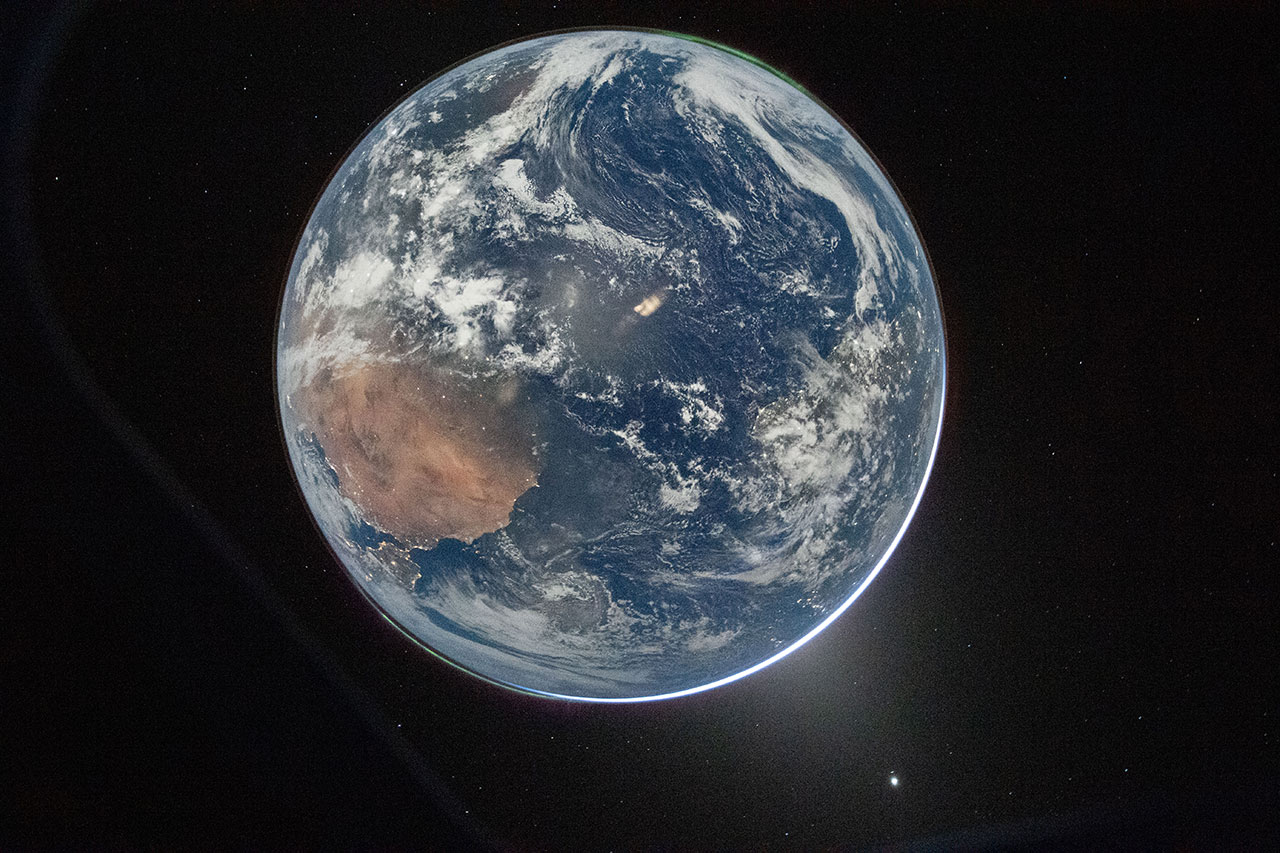
    The image, titled "Hello, World," shows the Earth's atmosphere in remarkable detail, including not just one, but two auroras, visible in the top right and bottom left, appearing as faint green hues.

    The glow on the bottom right of the image is “zodiacal light,” a faint glow also referred to as “false dawn,” that appears due to rays of light being scattered by interplanetary dust as the Earth eclipses the Sun.

    The photo, alongside another stunning image showing the Earth peeking through one of the Orion spacecraft’s windows after completing the translunar injection burn, were the two first images the Artemis 2 astronauts sent back to Earth.

    Since then, the team has sent back a treasure chest of astonishing views from their lunar flyby, including dramatic scenes of the lunar surface and the Earth setting and rising behind it.

    Considering the amazing photos we’ve already seen, there’s no doubt the memory cards they’ll be bringing back to Earth on Friday evening will contain an even greater collection of out-of-this-world views.

    More on Artemis photos: We’re In Utter Disbelief About the Photos the Moon Astronauts Just Sent Back

    Advertisement
    Share. Facebook Twitter Pinterest LinkedIn Tumblr Email
    The Tech Guy
    • Website

    Related Posts

    SpaceX Huge AI Revenue Growth Mirrors Micron But Will Be Bigger

    June 17, 2026

    Low Water at San Carlos Reservoir

    June 17, 2026

    SpaceX Stock Has Now Started to Fall

    June 17, 2026

    Elon Musk Reaches $1.4 Trillion in Net Worth

    June 16, 2026

    Department of Health and Human Services Digital Stockpile & Manufacturing Response Network Challenge

    June 16, 2026

    Japan Thinks Swarms of Transformer Robots Could Explore the Moon

    June 16, 2026
    Leave A Reply Cancel Reply

    Advertisement
    Top Posts

    You don’t need a NAS to self-host — I proved it with hardware from my closet

    June 7, 202672 Views

    Spotify is giving one of its best playlists a big visual upgrade to give subscribers ‘a closer connection’ to its New Music Friday curators — and I think it could be the update it’s always needed

    June 12, 202618 Views

    The iPad Air brand makes no sense – it needs a rethink

    October 12, 202516 Views
    Stay In Touch
    • Facebook
    • YouTube
    • TikTok
    • WhatsApp
    • Twitter
    • Instagram
    Advertisement
    About Us
    About Us

    SynapseFlow brings you the latest updates in Technology, AI, and Gadgets from innovations and reviews to future trends. Stay smart, stay updated with the tech world every day!

    Our Picks

    Kodak’s viral Charmera camera just got a Y2K redesign

    June 17, 2026

    ‘AI traffic is fundamentally changing how the Internet operates’: New report claims bot traffic is growing 6.5 times faster than human users — is this the end of the useful internet as we know it?

    June 17, 2026

    Webinar Today: How Modern Breaches Bypass MFA and Evade Detection

    June 17, 2026
    categories
    • AI News & Updates
    • Cybersecurity
    • Future Tech
    • Reviews
    • Software & Apps
    • Tech Gadgets
    Facebook X (Twitter) Instagram Pinterest YouTube Dribbble
    • Homepage
    • About Us
    • Contact Us
    • Privacy Policy
    © 2026 SynapseFlow All Rights Reserved.

    Type above and press Enter to search. Press Esc to cancel.

    Ad Blocker Enabled!
    Ad Blocker Enabled!
    Our website is made possible by displaying online advertisements to our visitors. Please support us by disabling your Ad Blocker.