

Close Menu

    Subscribe to Updates

    Get the latest Tech news from SynapseFlow

    What's Hot

    New Enterprise-Ready MCP Specification Brings New Security Challenges

    June 28, 2026

    NASA Tests New Refuel Device for Future In-Space Refueling Missions

    June 28, 2026

    Final’s affordable gaming headset offers an epic battery life and decent enough sound — but during testing, I found its claim to offer ‘immersive, spatial audio’ to be pretty overblown.

    June 28, 2026
    Facebook X (Twitter) Instagram
    • Homepage
    • About Us
    • Contact Us
    • Privacy Policy
    Facebook X (Twitter) Instagram YouTube
    synapseflow.co.uksynapseflow.co.uk
    • AI News & Updates
    • Cybersecurity
    • Future Tech
    • Reviews
    • Software & Apps
    • Tech Gadgets
    synapseflow.co.uksynapseflow.co.uk
    Home»Future Tech»NASA Tests New Refuel Device for Future In-Space Refueling Missions
    NASA Tests New Refuel Device for Future In-Space Refueling Missions
    Future Tech

    NASA Tests New Refuel Device for Future In-Space Refueling Missions

    The Tech GuyBy The Tech GuyJune 28, 2026No Comments3 Mins Read0 Views
    Share
    Facebook Twitter LinkedIn Pinterest Email
    Advertisement


    For NASA’s next generation of deep space exploration missions, spacecraft may need to refuel in Earth orbit before pushing farther into the solar system. Similar to how a gas pump needs a nozzle to fit your fuel tank, future spacecraft could require a special device in order to fill up prior to departure, known as a cryocoupler.

    Advertisement

    Cryocouplers would allow spacecraft to connect to future orbital propellant depots, which would serve as the gas stations of space. The technology comes with the challenge of reliably transferring cryogenic, or super-cold, fluids without losing propellant or performance. Cryogenic propellants like liquid hydrogen and liquid oxygen must stay chilled to hundreds of degrees below zero Fahrenheit, placing strict demands on the materials, seals, and mechanisms that move them.

    “In-orbit cryogenic refueling between two spacecraft has yet to be done and remains one of the toughest engineering challenges in spaceflight,” said Travis Belcher,  cryocoupler project manager at NASA’s Marshall Space Flight Center in Huntsville, Alabama. “These propellant transfers are essential for the kinds of missions NASA wants to fly in the future, so developing a coupler that can handle ultra-cold propellants is a critical step toward making that capability real.”

    Ground-based couplers like those used to fill the SLS (Space Launch System) for Artemis missions are not an option for orbiting propellant transfers. Those couplers release quickly while a rocket is launching and must be manually reconnected for the next flight. They also are not designed to operate in the harsh environment of space and are much larger than what would be used to refill an orbiting spacecraft’s fuel tank.

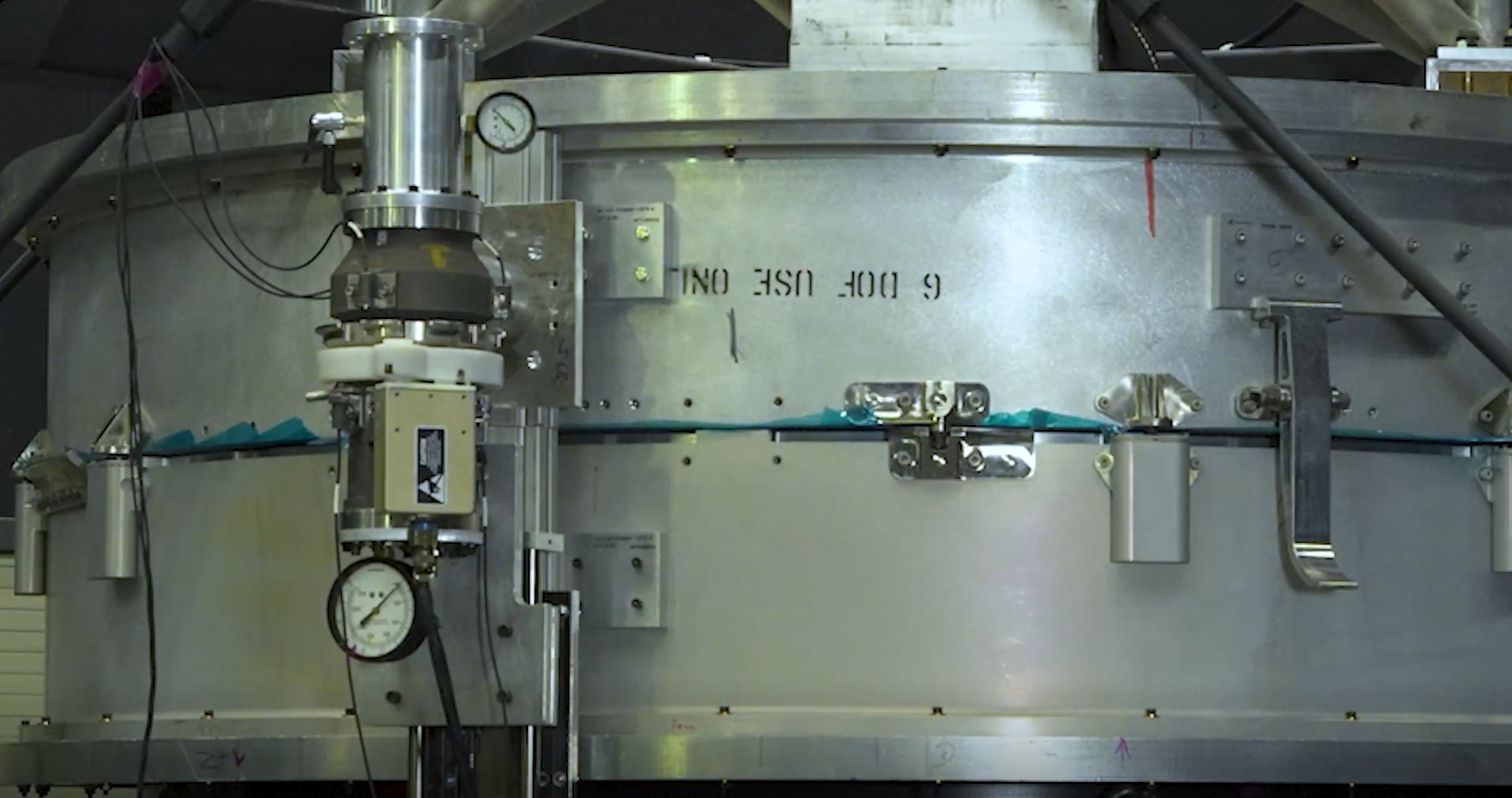
    To meet these challenges, NASA tested a cryocoupler developed by L3Harris.

    “The cryocouplers we’re working on can attach and detach multiple times and are fully automated, so astronauts won’t have to perform a spacewalk to transfer propellant,” said Belcher. “They’re rigorously designed to withstand space and sized for the expected tank designs.”

    A joint NASA and L3Harris team recently conducted two types of tests at NASA Marshall. To ensure the cryocoupler can handle the extremely cold temperatures it will be exposed to, they ran liquid nitrogen at minus 321 degrees Fahrenheit through multiple connected and disconnected configurations to observe how the coupler reacts to thermal contraction, flow, and significant temperature differences between propellant and materials.

    The team also put the cryocoupler through operational tests to determine its performance limits. In this setup, one coupler half was mounted to a robotic table that could move and rotate in any direction, allowing it to simulate misaligned docking with the other half, which remained stationary above the table. The cryocoupler is designed to accommodate some misalignment in case a spacecraft and depot are not perfectly aligned when docking.  

    “These cryocouplers are very early in development, so the testing is mostly focused on basic functionality,” said Belcher. “Future test campaigns will design them for specific missions and assess them more meticulously based on that mission’s requirements.”

    The cryocoupler testing was done as part of a 2022 Announcement of Collaboration Opportunity, a partnership where NASA centers provide select companies with expertise, facilities, hardware, and software at no cost.

    The Cryogenic Fluid Management Portfolio project, a cross-agency team based at NASA Marshall and NASA’s Glenn Research Center in Cleveland, oversees cryocoupler development.

    To learn more about cryogenic fluid management, visit:

    https://go.nasa.gov/CFM

    Advertisement
    Share. Facebook Twitter Pinterest LinkedIn Tumblr Email
    The Tech Guy
    • Website

    Related Posts

    This Week’s Awesome Tech Stories From Around the Web (Through June 27)

    June 28, 2026

    Tom Hanks Frets AI Could Voice Woody in Even More “Toy Story” Movies

    June 28, 2026

    Elon Winning AI Game of Thrones by Adding Gigawatts of Energy This Week

    June 27, 2026

    NASA Announces Winners for 2026 Human Lander Challenge

    June 27, 2026

    Orbital Data Centers Are Seductive on Paper, but They Face Daunting Challenges in Reality

    June 27, 2026

    Mark Zuckerberg Is Selflessly Building Yet Another Horrible Product Nobody Asked For

    June 27, 2026
    Leave A Reply Cancel Reply

    Advertisement
    Top Posts

    You don’t need a NAS to self-host — I proved it with hardware from my closet

    June 7, 2026169 Views

    Spotify is giving one of its best playlists a big visual upgrade to give subscribers ‘a closer connection’ to its New Music Friday curators — and I think it could be the update it’s always needed

    June 12, 202690 Views

    The iPad Air brand makes no sense – it needs a rethink

    October 12, 202516 Views
    Stay In Touch
    • Facebook
    • YouTube
    • TikTok
    • WhatsApp
    • Twitter
    • Instagram
    Advertisement
    About Us
    About Us

    SynapseFlow brings you the latest updates in Technology, AI, and Gadgets from innovations and reviews to future trends. Stay smart, stay updated with the tech world every day!

    Our Picks

    New Enterprise-Ready MCP Specification Brings New Security Challenges

    June 28, 2026

    NASA Tests New Refuel Device for Future In-Space Refueling Missions

    June 28, 2026

    Final’s affordable gaming headset offers an epic battery life and decent enough sound — but during testing, I found its claim to offer ‘immersive, spatial audio’ to be pretty overblown.

    June 28, 2026
    categories
    • AI News & Updates
    • Cybersecurity
    • Future Tech
    • Reviews
    • Software & Apps
    • Tech Gadgets
    Facebook X (Twitter) Instagram Pinterest YouTube Dribbble
    • Homepage
    • About Us
    • Contact Us
    • Privacy Policy
    © 2026 SynapseFlow All Rights Reserved.

    Type above and press Enter to search. Press Esc to cancel.

    Ad Blocker Enabled!
    Ad Blocker Enabled!
    Our website is made possible by displaying online advertisements to our visitors. Please support us by disabling your Ad Blocker.