

Close Menu

    Subscribe to Updates

    Get the latest Tech news from SynapseFlow

    What's Hot

    Brava Security Emerges From Stealth With $15 Million in Funding

    November 8, 2026

    NASA’s Moon Mission Ripped a Hole in Earth’s Upper Atmosphere So Massive That It Disrupted GPS Signals

    November 8, 2026

    Magnetar’s UDP900MKII and UDP800MKII 4K UHD players now have THX certification

    November 8, 2026
    Facebook X (Twitter) Instagram
    • Homepage
    • About Us
    • Contact Us
    • Privacy Policy
    Facebook X (Twitter) Instagram YouTube
    synapseflow.co.uksynapseflow.co.uk
    • AI News & Updates
    • Cybersecurity
    • Future Tech
    • Reviews
    • Software & Apps
    • Tech Gadgets
    synapseflow.co.uksynapseflow.co.uk
    Home»Future Tech»NASA’s Moon Mission Ripped a Hole in Earth’s Upper Atmosphere So Massive That It Disrupted GPS Signals
    NASA’s Moon Mission Ripped a Hole in Earth’s Upper Atmosphere So Massive That It Disrupted GPS Signals
    Future Tech

    NASA’s Moon Mission Ripped a Hole in Earth’s Upper Atmosphere So Massive That It Disrupted GPS Signals

    The Tech GuyBy The Tech GuyNovember 8, 2026No Comments3 Mins Read0 Views
    Share
    Facebook Twitter LinkedIn Pinterest Email
    Advertisement


    Sign up to see the future, today

    Can’t-miss innovations from the bleeding edge of science and tech

    Advertisement

    Apart from certain issues with their space toilet, the crew of four NASA astronauts’ journey around the Moon and back earlier this year was a resounding success.

    The mission officially broke the record for the farthest any human has ever traveled from Earth, gave crew members astonishing views of the far side of the Moon — and, of course, set the stage for NASA’s first attempt to land astronauts on the lunar surface in over half a century.

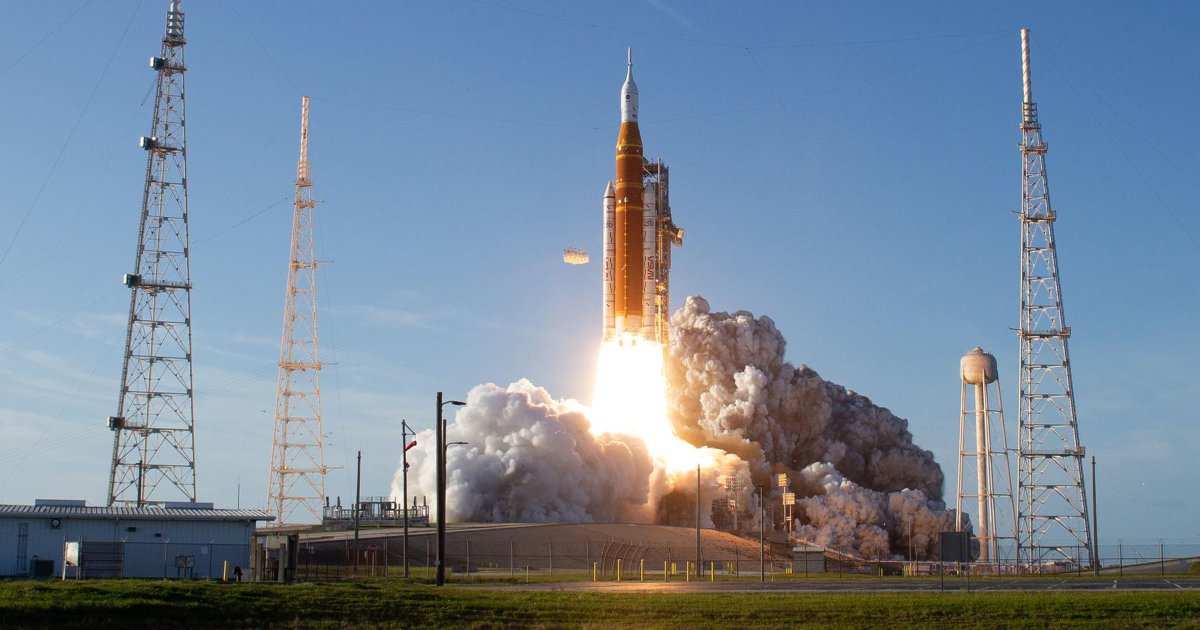
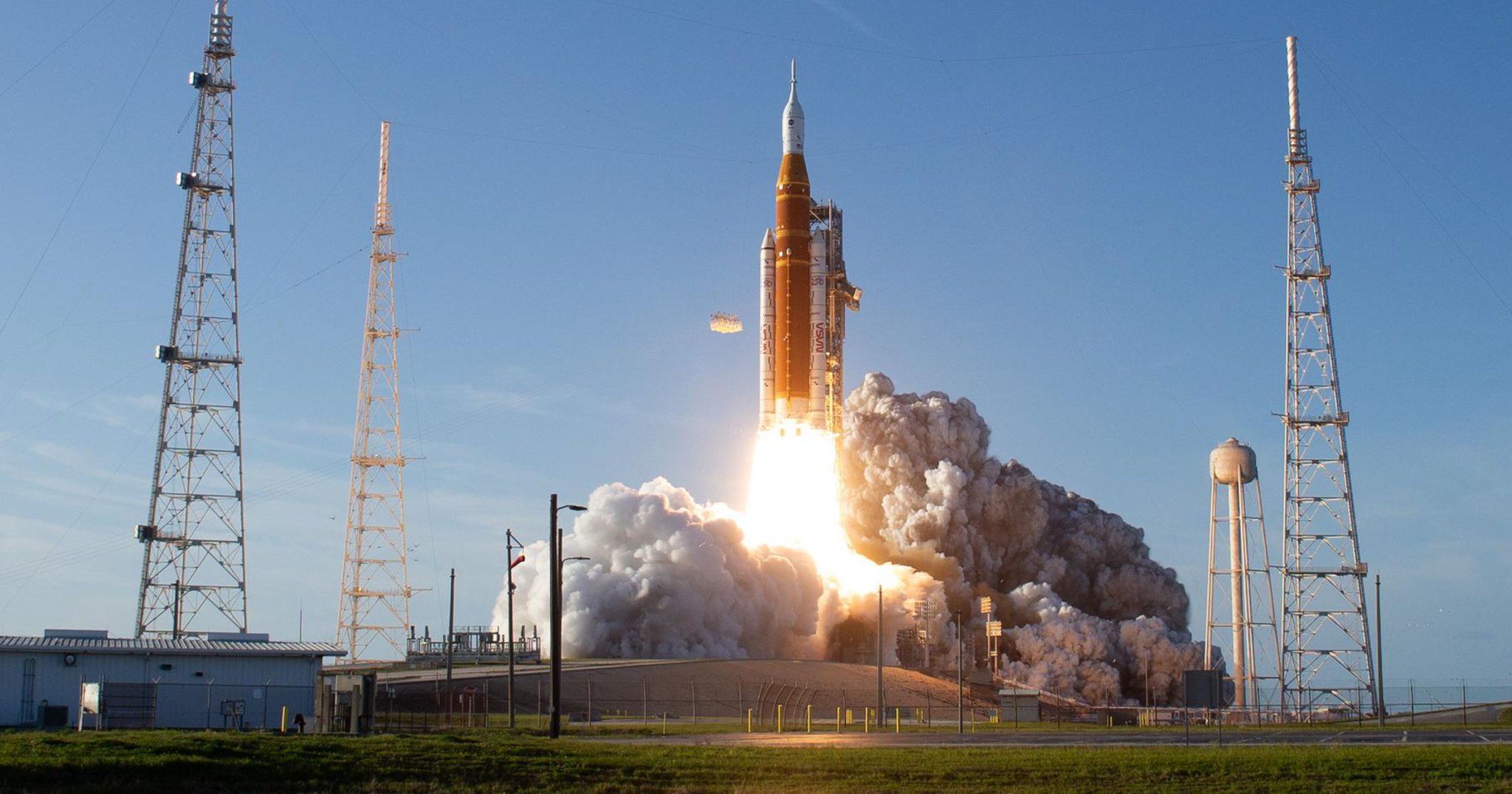
    Now, according to a new study published in the journal Geophysical Research Letters, it turns out that the April rocket launch also managed to tear a massive hole in the Earth’s upper atmosphere, as Space.com reports — a major disruption in the ionosphere that was powerful enough to throw off GPS signals.

    By analyzing data from ground-based GPS receivers, a team of researchers from the National Cheng Kung University in Taiwan reconstructed how NASA’s Space Launch System rocket changed the concentrations of free electrons in the Earth’s atmosphere.

    “The total electron content observations during the Artemis-II Lunar mission revealed rare reoccurring ionospheric perturbations at three different occasions,” the team noted in its paper. The launch “triggered shock waves and unprecedented large-scale disturbances” across North America.

    Coauthor and National Cheng Kung University earth science professor Charles Lin told Space.com that the resulting positioning errors could have had serious repercussions back on the ground.

    “A positioning error of a couple of meters is enough to cause an autonomous car to change lanes,” he said. “It could have a strong impact not only on self-driving cars but also on drone positioning.”

    Other disturbances, such as powerful solar storms, can similarly wreak havoc on GPS and other positioning systems. For instance, in November of last year, a major surge in solar activity released enough charged particles to cause “significant positioning errors” of over 33 feet, “large enough to disrupt precision agriculture and autonomous transportation industries” in the US, a paper at the time concluded.

    NASA’s SLS, one of the most powerful rockets ever built, conducted three maneuvers — an initial launch, an apogee boost burn, and a trans-lunar injection — that were localized “over the same region,” causing major “ionospheric perturbations,” the authors of the latest paper found, mimicking the effects of a major solar storm, albeit on a much shorter time frame.

    “These findings establish orbital maneuver burns performed within the ionosphere as a distinct and repeatable source of anthropogenic space weather, beyond the well-established launch-stage disturbances,” the researchers wrote.

    Ahead of future launches, they suggest studying the effects of these perturbances on the health of the ionosphere as a whole, as well as their effects on global navigation systems and high-frequency communications.

    More on the Moon: US Space Force Declares Far Side of the Moon a “Warfighting Domain,” Weighs Launch of Five Military Lunar Satellites

    Advertisement
    Share. Facebook Twitter Pinterest LinkedIn Tumblr Email
    The Tech Guy
    • Website

    Related Posts

    HUGE Things in About Tesla and SpaceX – NextBigFuture.com

    November 8, 2026

    NASA Awards Moon Base Transportation, Technology, Science Projects

    November 8, 2026

    This Week’s Awesome Tech Stories From Around the Web (Through November 7)

    November 7, 2026

    AI Godfather Says to Get Ready for a Chernobyl-Style “Blackout” Caused by AI

    November 7, 2026

    Why Static Security Awareness Training Programs Can’t Keep Up With AI-Powered Phishing – NextBigFuture.com

    November 7, 2026

    M30’s Sparkling Stars – NASA

    November 7, 2026
    Leave A Reply Cancel Reply

    Advertisement
    Top Posts

    You don’t need a NAS to self-host — I proved it with hardware from my closet

    June 7, 2026394 Views

    Spotify is giving one of its best playlists a big visual upgrade to give subscribers ‘a closer connection’ to its New Music Friday curators — and I think it could be the update it’s always needed

    June 12, 2026212 Views

    The iPad Air brand makes no sense – it needs a rethink

    October 12, 202518 Views
    Stay In Touch
    • Facebook
    • YouTube
    • TikTok
    • WhatsApp
    • Twitter
    • Instagram
    Advertisement
    About Us
    About Us

    SynapseFlow brings you the latest updates in Technology, AI, and Gadgets from innovations and reviews to future trends. Stay smart, stay updated with the tech world every day!

    Our Picks

    Brava Security Emerges From Stealth With $15 Million in Funding

    November 8, 2026

    NASA’s Moon Mission Ripped a Hole in Earth’s Upper Atmosphere So Massive That It Disrupted GPS Signals

    November 8, 2026

    Magnetar’s UDP900MKII and UDP800MKII 4K UHD players now have THX certification

    November 8, 2026
    categories
    • AI News & Updates
    • Cybersecurity
    • Future Tech
    • Reviews
    • Software & Apps
    • Tech Gadgets
    Facebook X (Twitter) Instagram Pinterest YouTube Dribbble
    • Homepage
    • About Us
    • Contact Us
    • Privacy Policy
    © 2026 SynapseFlow All Rights Reserved.

    Type above and press Enter to search. Press Esc to cancel.

    Ad Blocker Enabled!
    Ad Blocker Enabled!
    Our website is made possible by displaying online advertisements to our visitors. Please support us by disabling your Ad Blocker.