

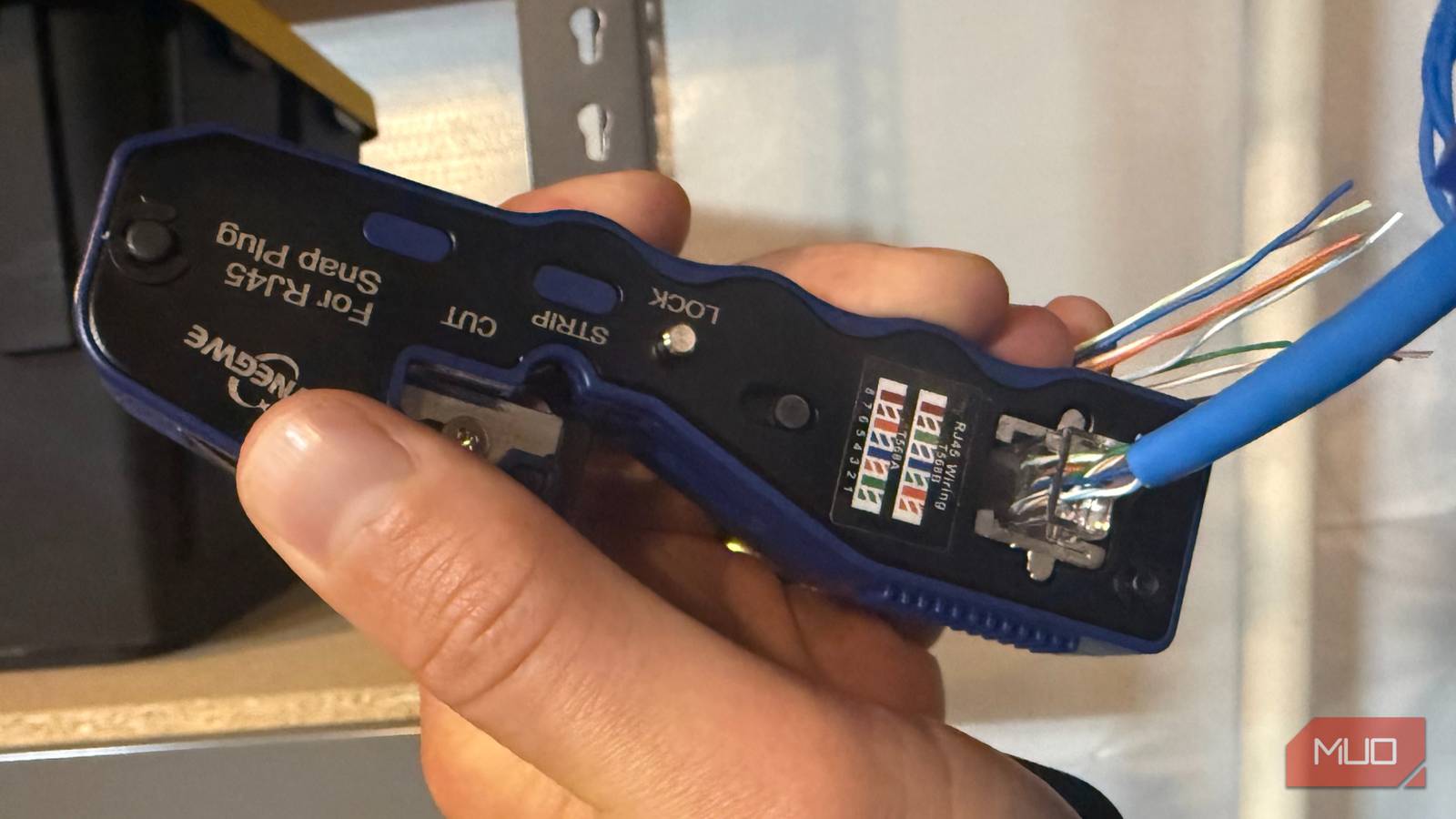

I wired the basement of my house myself, running Cat6 to every drop, and I still crimp my own cables when I need an odd length. So I went in with more confidence than tools. My setup was basically a crimper, a spool of cable, and a cheap continuity tester I grabbed to check my ends. It worked. It also left me improvising at every step that needed a tool I didn’t own.
The InstallerParts Professional Network Tool Kit is the 15-in-1 case I keep seeing now and thinking back to that project. It collects nearly everything I reached for and came up short on. At around $82, it would have paid for itself in saved trips to the hardware store.
The tone generator and probe would have saved me the most time
Tracing an unlabeled run in under a minute

I finished with 15-plus wired connections and zero labels at the rack. When I ditched mesh for a real wired backbone, a dozen identical white cables all landed in the same spot, and none of them announced which room it fed. My fix at the time was walking the house and unplugging things until something went dark. Slow, and a little dumb.
The kit’s wire tracker is the tool that ends that. You clip the sender onto one end of a cable, then run the probe along the bundle until it squeals over the matching wire. Installers call it a tone generator and probe. It turns a guessing game into a 30-second job, and it works on a dead cable, so you can trace a run before anything is connected. The included earbuds let you hear the tone in a loud mechanical room. That one tool is most of why I’d buy the case.
The half of the job a crimper can’t do
Crimping an RJ45 plug onto the end of a cable is only half of a real network. The other half is the female side: keystone jacks in wall plates and the patch panel at the rack. Those don’t get crimped. They get punched, and for that you need a punch-down tool, which seats each wire into its slot and trims the excess in one push.
I didn’t own one, so I skipped in-wall jacks entirely and left bare cables poking through faceplates. Functional, ugly, and fragile. This kit bundles a 66/110 punch-down tool, which handles both older phone blocks and modern data panels. Owning one back then would have changed how every drop ended. My jacks would seat clean instead of leaving bare wire at the plate, and moving a device would mean swapping a patch cable rather than crimping a fresh end. That gap separates a real wiring closet from a heap of cables that happens to work.
The built-in tester catches a bad run before it costs you
Verify each pin before the drywall goes up

A network runs only as fast as its worst cable. I found that out after one bad run quietly throttled part of my network, and it cost me weeks of hunting. The right tester would have caught it on day one.
Its tester walks all eight conductors and tells you whether each one hit the correct pin. Miswire the order and you get one of two headaches: a dead link, or a live one that limps along at a fraction of its speed. That second kind hides for months. Since every one of those eight wires has a job to do, the tester is how you confirm the sequence before drywall goes back up. It runs on a 9V battery that the kit leaves out of the box, so grab one before you start. Testing as you go beats tearing drywall back open later.
The stripper, the crimper, and a case that holds it together
The basics I’d otherwise dig out of a junk drawer

The rest of the kit is the everyday stuff I cobbled together from a junk drawer. There’s a 20–30 gauge stripper that scores the jacket without nicking the pairs inside, which matters more than it sounds, since a chewed-up jacket is a slow way to ruin a cable. There’s the RJ45 crimper too, rated for everything from Cat5e up to Cat8. I already had a crimper I liked, so that piece is a wash for me, but it means a first-timer gets the whole chain in one box.
Then there’s the case itself. My tools lived scattered across two floors during the build, and a good chunk of my wasted time was just finding them. A single 3.55-pound case with a slot for each tool is a boring upgrade that would have kept me moving. It also travels, which helps if you end up wiring drops for friends.

- Brand
-
InstallerParts
- Connector Type
-
RJ45
Who this kit is actually for
A 15-in-1 case is overkill for one patch cable. If that’s all you need, buy a pre-made cable and move on. But if you’re wiring a house, finishing a basement, or you expect to keep adding drops the way I have, the math flips fast. Buying the punch-down, the tone probe, the tester, and the stripper separately runs more than the roughly $82 bundle, and you’d still be missing the case that keeps them together. I wired my house without it and made it work. The next drop I run, I won’t be improvising.
