



The Dylan Patel, head of Semianalysis, interview is a must watch for anyone tracking AI economics, infrastructure, and future societal shifts. SemiAnalysis’s own AI spend exploded from tens of thousands last year to $7 million annualized run-rate right now. Even non-technical staff are now heavy Claude/Code users. Semianalysis metrics and work are cited by Nvidia CEO Jensen Huang at his keynote address.
One person spent a couple thousand dollars to build a GPU-accelerated chip reverse-engineering dashboard that previously required an entire Intel team.
Economist Malcolm single-handedly built a full US energy-grid mapping + regression analysis + 2,000-task AI-impact benchmark in weeks. This would have taken 200 economists a year.
Anthropic revenue has 10x’d from ~$9B to $35–45B ARR. Margins are now 72%+ (possibly higher) because demand is so strong they can raise prices, cut rate limits, and still sell every token.
Get an enterprise Anthropic contract (pay-per-token) to avoid rate limits. The best models are becoming model hoarding.
2. The New Economic Reality: Ideas Cheap, Execution Easy
Old world was Ideas were cheap, execution was brutally hard.
New world is Ideas are abundant and cheap. Execution is now trivial and cheap (via frontier models).
Only truly great ideas justify the (still-expensive) token spend. Everything else gets commoditized fast.
Businesses that move fastest with AI (constantly raising the bar) will grow explosively; incumbents that don’t will be crushed.
3. Robotics Breakthrough Window
Dylan predicts a major humanoid robotics learning breakthrough in 6–18 months (anytime in 2027). Few shot learning.
Current vision-language-action models are data-inefficient. Once software singularity makes implementation trivial, we will see few-shot / one-shot robot learning (show the robot 1–2 examples → it does the task). IF True, then Tesla Optimus will be a huge winner.
This will trigger a second massive token-demand wave and accelerate physical-world deflation.
4. Compute & Supply-Chain Bottlenecks
Demand is outrunning supply everywhere.
Memory (DRAM especially) is the biggest near-term crunch. Capacity only grows 20–30%/year. Memory prices will double or triple again.
TSMC is sold out and squeezing every fab. Capex is exploding (projected $100B+ in 2028).
CPUs are unexpectedly critical (reinforcement learning environments + running all the slop code / deployed apps).
GPU H100 useful life is extending dramatically (clusters now lasting 7–8+ years). Secondary-market prices are skyrocketing.
Every layer of the stack (memory, logic, optics, copper foil, PCBs, wafer fab equipment) is seeing margin expansion and pre-payments.
5. Societal & Economic Implications
Phantom GDP is where AI is driving massive output increases while slashing costs → traditional GDP metrics look flat or even shrink even as real economic value explodes.
RISK Permanent AI Underclass
If you’re not aggressively using tokens to generate 5–10× output and capture the value, you’ll fall behind permanently. Lazy use (work 1 hour instead of 8) is the wrong path. The winning path is 8× output.
Model hoarding & power concentration Frontier models will be gated to fewer, richer customers who can pay and generate the most value.
6. Bold Prediction of AI unrest by the Fall of 2026
Large-scale public protests against AI (and Anthropic/OpenAI specifically) within 3 months.
Reasons AI is already less popular than ICE or politicians (per recent Pew data). Job displacement fears, lack of charisma from Sam Altman/Dario Amodei, and constant world-changing talk are fueling anger.
Countermeasures needed. Stop doomer interviews, show concrete uplifting use-cases today, and rebrand around present-day benefits.
Bottom line>B
Token demand is unlimited and explosive for the next 6–18 months (and beyond). Compute supply cannot keep up. The winners will be those who
(1) get access to the best models
(2) point them at the highest-value ideas, and
(3) capture the resulting economic value before it becomes table stakes.
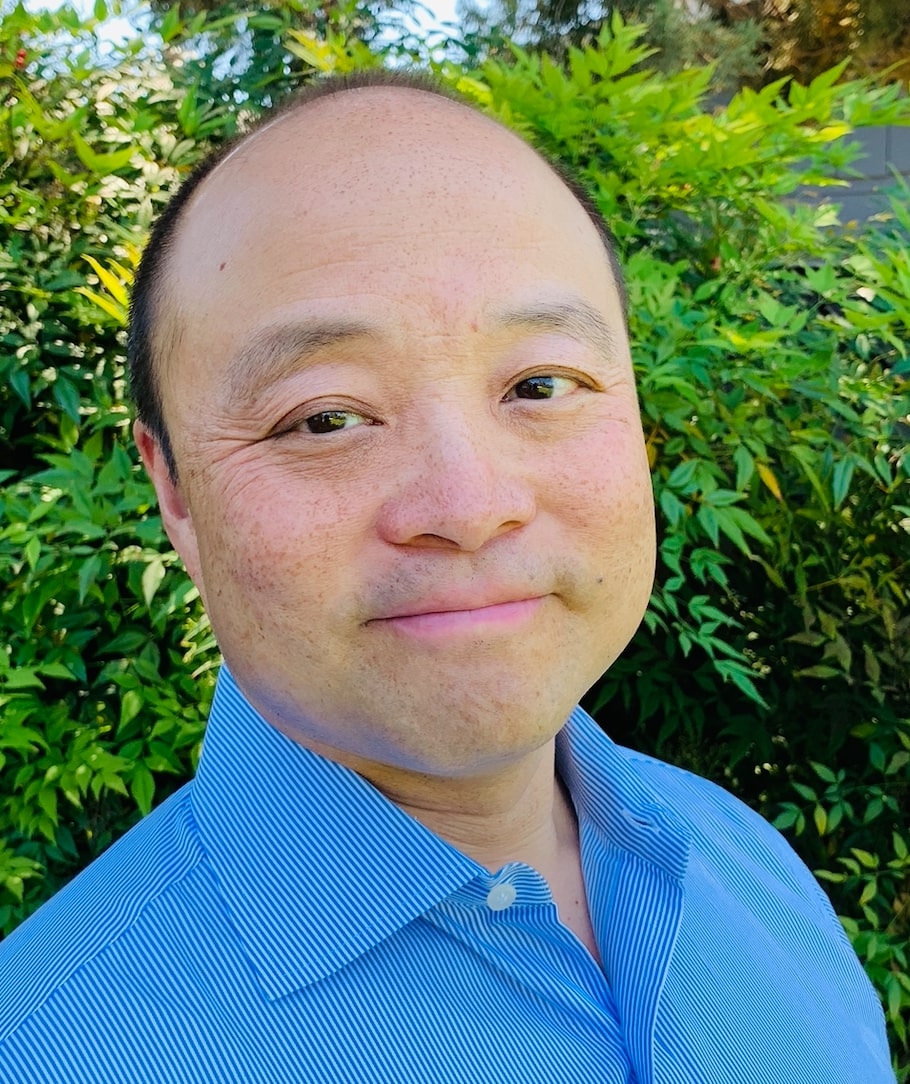
Brian Wang is a Futurist Thought Leader and a popular Science blogger with 1 million readers per month. His blog Nextbigfuture.com is ranked #1 Science News Blog. It covers many disruptive technology and trends including Space, Robotics, Artificial Intelligence, Medicine, Anti-aging Biotechnology, and Nanotechnology.
Known for identifying cutting edge technologies, he is currently a Co-Founder of a startup and fundraiser for high potential early-stage companies. He is the Head of Research for Allocations for deep technology investments and an Angel Investor at Space Angels.
A frequent speaker at corporations, he has been a TEDx speaker, a Singularity University speaker and guest at numerous interviews for radio and podcasts. He is open to public speaking and advising engagements.
