

Close Menu

    Subscribe to Updates

    Get the latest Tech news from SynapseFlow

    What's Hot

    Samsung ultimately refuses BOE panels for the Galaxy S27, new report says

    June 30, 2026

    AirDrop and Quick Share flaws could expose billions of devices

    June 30, 2026

    BlueHammer Vulnerability Exploited in Ransomware Attacks

    June 30, 2026
    Facebook X (Twitter) Instagram
    • Homepage
    • About Us
    • Contact Us
    • Privacy Policy
    Facebook X (Twitter) Instagram YouTube
    synapseflow.co.uksynapseflow.co.uk
    • AI News & Updates
    • Cybersecurity
    • Future Tech
    • Reviews
    • Software & Apps
    • Tech Gadgets
    synapseflow.co.uksynapseflow.co.uk
    Home»Tech Gadgets»AirDrop and Quick Share flaws could expose billions of devices
    AirDrop and Quick Share flaws could expose billions of devices
    Tech Gadgets

    AirDrop and Quick Share flaws could expose billions of devices

    The Tech GuyBy The Tech GuyJune 30, 2026No Comments3 Mins Read0 Views
    Share
    Facebook Twitter LinkedIn Pinterest Email
    Advertisement


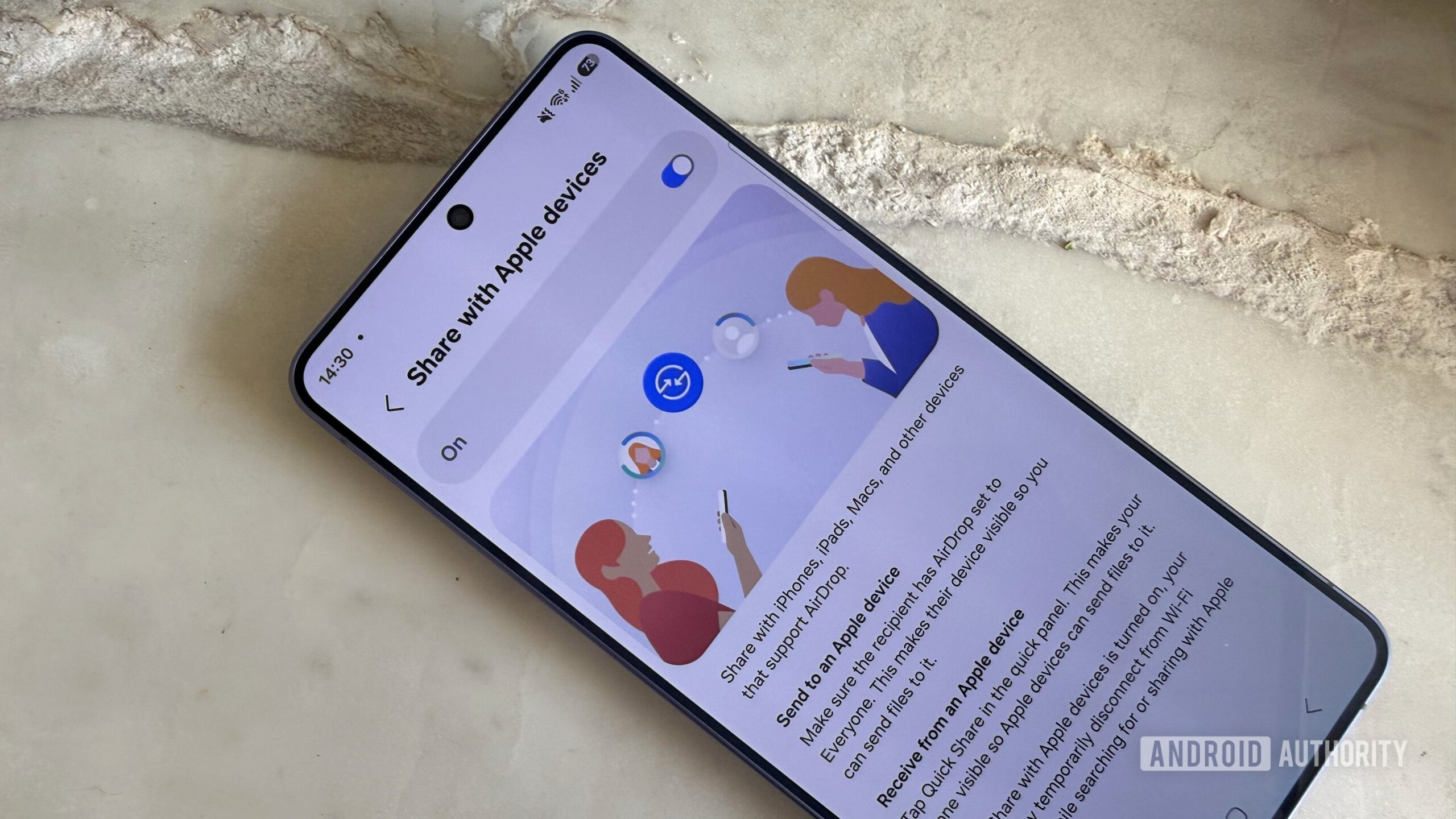
    Samsung Galaxy S26 Ultra Share With Apple Devices Quick Share Airdrop

    Adamya Sharma / Android Authority

    Advertisement

    TL;DR

    • New security flaws in AirDrop and Quick Share affect more than five billion Apple and Android devices.
    • A hacker within 30 meters can exploit the bugs, without requiring a phishing link, Wi-Fi access, or physical contact.
    • Researchers say both file-sharing systems prioritize seamless transfers, exposing background services before verifying who’s sending the request.

    Sharing a photo or document with a nearby phone has become second nature, but new security research suggests that the convenience behind AirDrop and Quick Share has a much larger attack surface than many realize.

    A new wave of vulnerabilities in Apple’s AirDrop and Android’s Quick Share puts well over five billion active devices at risk. A bad actor doesn’t need to touch your phone, send you a phishing link, or share your Wi-Fi network — they just need to be within 30 meters of you with a laptop, researchers at the CISPA Helmholtz Center for Information Security have found (via Help Net Security). The team took apart both of the ecosystems to see how they deal with wireless file transfers. These features run as highly privileged services in the background that wake up the second another device comes near, because they prioritize a seamless experience.

    On the Apple side, the bug is taking advantage of a background daemon that controls AirDrop, AirPlay, Handoff, Universal Clipboard, and Continuity Camera. All it takes is one malformed request to crash the entire system. If an attacker loops that request every few seconds, they essentially hold your Apple ecosystem hostage, keeping those features permanently offline.

    Quick Share doesn’t cut it either. Researchers tested a Samsung Galaxy S23 Ultra and Google’s Windows client, discovering logic bypasses that allowed attackers to completely bypass critical authentication steps. They even found a memory corruption bug on the Windows side. Researchers found that even though Apple and Google shared pretty much zero code, both of them fell into the same trap: sacrificing security for convenience by exposing complex background processes before the identity of the sender could be verified.

    It should be noted that the issue is not a data theft situation. Attackers don’t just quietly steal private photos from your device. For the average user, it’s mostly a giant denial-of-service nuisance. However, if you’re constantly transferring files using AirDrop or Quick Share, having someone hijack your connection state can be quite frustrating.

    Fixes are already starting to trickle down. Apple has fixed one of the three AirDrop bugs in a recent update, and Google already has a fix out for its Windows client. The rest of the issues, including Samsung bypasses, are still under development or under coordinated disclosure.

    But don’t just sit around waiting for a software update to save you. The most vulnerable users are those who have their devices set to accept files from “Everyone.” Go to your iPhone’s General settings or your Android’s Quick Share menu right now and set your visibility to “Contacts Only” — or turn receiving off altogether.

    Thank you for being part of our community. Read our Comment Policy before posting.

    Advertisement
    Share. Facebook Twitter Pinterest LinkedIn Tumblr Email
    The Tech Guy
    • Website

    Related Posts

    The best physical audio format out there is one you’ll never guess

    June 30, 2026

    If you kill every Fable NPC, Playground Games says the world will ‘stay empty for some time’ before being repopulated by ‘full NPCs’

    June 30, 2026

    Nothing Phone (4b) live images show all three colors, confirm key specs

    June 30, 2026

    Gemini overlay could soon make your recent chats easier to reach

    June 29, 2026

    5 legendary action movies you can stream for free right now

    June 29, 2026

    How to watch Wimbledon 2026: FREE live streams, TV channels, order of play

    June 29, 2026
    Leave A Reply Cancel Reply

    Advertisement
    Top Posts

    You don’t need a NAS to self-host — I proved it with hardware from my closet

    June 7, 2026169 Views

    Spotify is giving one of its best playlists a big visual upgrade to give subscribers ‘a closer connection’ to its New Music Friday curators — and I think it could be the update it’s always needed

    June 12, 202690 Views

    The iPad Air brand makes no sense – it needs a rethink

    October 12, 202516 Views
    Stay In Touch
    • Facebook
    • YouTube
    • TikTok
    • WhatsApp
    • Twitter
    • Instagram
    Advertisement
    About Us
    About Us

    SynapseFlow brings you the latest updates in Technology, AI, and Gadgets from innovations and reviews to future trends. Stay smart, stay updated with the tech world every day!

    Our Picks

    Samsung ultimately refuses BOE panels for the Galaxy S27, new report says

    June 30, 2026

    AirDrop and Quick Share flaws could expose billions of devices

    June 30, 2026

    BlueHammer Vulnerability Exploited in Ransomware Attacks

    June 30, 2026
    categories
    • AI News & Updates
    • Cybersecurity
    • Future Tech
    • Reviews
    • Software & Apps
    • Tech Gadgets
    Facebook X (Twitter) Instagram Pinterest YouTube Dribbble
    • Homepage
    • About Us
    • Contact Us
    • Privacy Policy
    © 2026 SynapseFlow All Rights Reserved.

    Type above and press Enter to search. Press Esc to cancel.

    Ad Blocker Enabled!
    Ad Blocker Enabled!
    Our website is made possible by displaying online advertisements to our visitors. Please support us by disabling your Ad Blocker.