

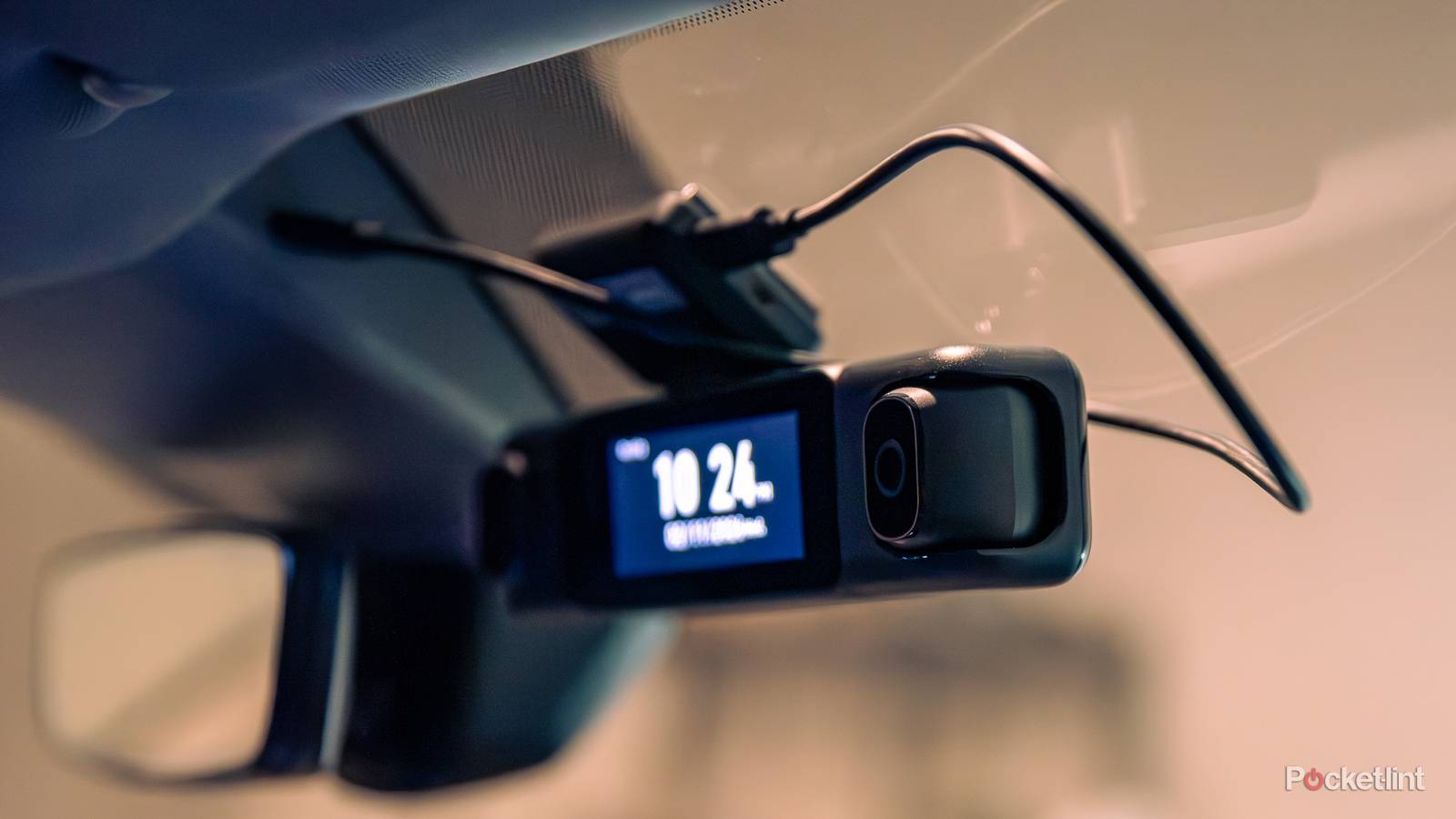

In today’s economy, everyone is trying to scrape a few extra dollars together each month, and who could blame them? Even if it’s just saving a few quarters each week, it can add up over time. I, for one, never pass up the chance to save a buck; just ask the missus, and that’s why I went ahead and installed dash cameras in both of our cars. While it may not bring my monthly price down, it sure can keep it from a future rate hike and make future claims that much easier.
But what direction should you go? Should you hardwire your dashcam, or have it record only while driving? What’s the best kind of dash camera to buy? All of these can and will be answered, but the biggest point is this: for the low upfront cost of getting a dash cam in 2026, it makes more sense to have one and not need one than to need one and not have one.
 Quiz
QuizDash cam trivia
The ultimate road test challenge
From loop recording to legal evidence — how much do you really know about dash cams?
TechnologyLegalHistoryFeaturesSafety
Which country is widely credited with popularising dash cams among everyday drivers in the early 2010s?
Correct! Russia became famous for its widespread dash cam adoption largely due to widespread insurance fraud and unreliable policing. The result was a treasure trove of viral footage, including the famous Chelyabinsk meteor video captured in 2013.
Not quite. The answer is Russia. Rampant insurance fraud, corrupt traffic police, and a lack of reliable witnesses led Russian drivers to adopt dash cams en masse — making the country the unofficial home of dash cam culture.
What does ‘loop recording’ mean in the context of dash cams?
Correct! Loop recording ensures a dash cam never stops recording due to a full memory card. It overwrites the oldest clips first, so you always have the most recent footage saved without needing to manually clear storage.
Not quite. Loop recording means the dash cam continuously overwrites the oldest footage once the memory card is full. This keeps the camera always ready to record without requiring manual storage management.
What is the primary purpose of a dash cam’s ‘parking mode’ feature?
Correct! Parking mode keeps the dash cam active while the car is unattended, typically triggered by motion or an impact sensor. It’s especially useful for capturing hit-and-run incidents or vandalism in car parks.
Not quite. Parking mode is designed to monitor your vehicle while it’s parked and unattended. Using motion detection or G-sensors, it starts recording if someone bumps or approaches your car, helping catch incidents you’d otherwise miss.
In the UK, dash cam footage submitted to police as evidence of dangerous driving is often processed through which dedicated scheme?
Correct! Operation Snap is a Welsh police initiative that was adopted more widely across UK forces, allowing members of the public to submit dash cam and helmet cam footage of road offences online. It has led to thousands of successful prosecutions.
Not quite. The answer is Operation Snap. Originally launched in Wales, this scheme allows drivers to upload dash cam footage of road traffic offences directly to police, and has since been rolled out by numerous forces across the UK.
What does a dash cam’s G-sensor (or gravity sensor) primarily detect?
Correct! A G-sensor measures gravitational force changes caused by sudden braking, sharp cornering, or a collision. When triggered, it automatically locks the current footage so it cannot be overwritten by loop recording — preserving evidence of an incident.
Not quite. The G-sensor detects sudden forces like impacts or hard braking. When it senses these, it locks the current recording so loop recording won’t erase it — making it an essential feature for preserving crash evidence automatically.
Which video resolution is considered the current standard for a good quality dash cam recording that balances detail with file size?
Correct! 1080p Full HD is widely regarded as the sweet spot for dash cams, offering enough detail to read number plates and road signs clearly without generating excessively large files that fill a memory card too quickly.
Not quite. While 4K dash cams exist and 720p is acceptable, 1080p Full HD is considered the standard for balancing image quality with file size. It captures enough detail to read licence plates clearly, which is the core job of a dash cam.
Studies and insurance industry data generally suggest that drivers who use dash cams tend to exhibit which behaviour compared to non-dash cam users?
Correct! Insurance data and behavioural studies suggest that knowing they are being recorded encourages drivers to adopt safer habits. Some insurers even offer premium discounts to drivers who fit approved dash cams for this reason.
Not quite. The answer is that dash cam users tend to drive more safely. The awareness of being recorded appears to encourage more cautious behaviour, and several UK insurers offer policy discounts to drivers who install approved dash cam devices.
The 2013 Chelyabinsk meteor event, one of the most viewed dash cam videos ever, occurred over which country?
Correct! The Chelyabinsk meteor exploded over Russia in February 2013, and because of the country’s enormous dash cam culture, the event was captured from dozens of different angles simultaneously. The footage gave scientists invaluable data about the meteor’s trajectory.
Not quite. The Chelyabinsk meteor streaked across the skies of Russia in 2013. Thanks to Russia’s exceptionally high density of dash cams, it became one of the most thoroughly documented meteor events in history, filmed from roads all across the region.
Your Score
/ 8
Thanks for playing!
DashCams won’t slice your monthly rate
But they could keep it stable in a pinch

At this point, 77 percent of drivers have been in a car accident at some point in their lives. That doesn’t mean that they were at fault or were driving, but they were present and involved in the crash. If you’re one of the 23% who haven’t, consider yourself lucky. That means that for the majority of drivers, they’ll have to deal with an accident on their record at some point, and oftentimes that means higher insurance costs, no matter who is at fault. According to brokers, dash cams do not actually decrease the likelihood of a driver getting into a crash and therefore play no role in their monthly rate.
Is that unfair? Probably so, but will it change anytime soon? Also, probably not. However, what you can do in order to prevent a severe rate hike is prove that you weren’t at fault in an accident, and a dash cam does exactly that, assuming you’re not the one driving like a lunatic. Then again, you wouldn’t do that, would you? More often than not, any accident claim will be disputed, leading to long battles between insurance agencies and, in turn, driving prices up. A good piece of dashcam footage can speed up that process, keep costs lower for all parties, and get your claim resolved more quickly.
Dashcams are an easy choice for commercial drivers
If your livelihood depends on the road, this is a no-brainer

Commercial drivers have to deal with so much more than the average driver already, from constantly going from city to city or valeting passengers back and forth, and they’re just as susceptible to accidents as you and me. For them, dashcams can be a fail-safe for their careers and companies. For an Uber or Lyft driver, it can be the difference in a he-said—she-said case in which you’re being accused of endangering passengers. For a long-haul trucker or hauler, it can be the difference in making sure your company doesn’t get taken to the woodshed by an insurance agency, like it was for this one.
Fleet vehicles are a common place where you can find top-notch dashcam equipment, because when your company’s livelihood depends on making ends meet on the open road or traveling to and from job sites, protecting those assets from dishonest insurance claims is just as important as keeping them clean and up-to-date on maintenance. This is where dashcams can come in the most handy and prevent insurance claims from dragging on longer than any party wants them to.
What you should look for in a dash cam
Not all models are created equal, and you don’t always get what you pay for

Just as all regular cameras have their differences, so do dashcams. There’s an endless list of features that you can opt for when choosing your next dashcam, but in reality, most of them are just fluffing. Here’s what you really need:
- At least 1080p recording capability. Most will advertise 4K, but seeing how these cameras actually perform upon playback is a must.
- Wide-angle lenses to ensure that both corners of whatever end of the vehicle each camera is covering are visible.
- Night vision for both internal and external views to ensure that you’re protected from hazardous drivers around the clock.
- GPS Tracking means that your camera is smart enough to know where it’s at and, most importantly, tell what speed you’re traveling.
- Parking mode to monitor your car when it’s left unattended in garages or parking lots.
All of these features will help protect you against a would-be bad driver, and in some cases, could end up saving you and your insurance company thousands in legal fees and claims costs. In 2026, getting a dash cam isn’t just a smart thing to do. With prices being what they are now, it’s almost irresponsible not to.
