

Close Menu

    Subscribe to Updates

    Get the latest Tech news from SynapseFlow

    What's Hot

    Android 17 stable update is rolling out to Pixel phones

    June 17, 2026

    Samsung phones will soon let you check your pet’s health with a photo

    June 17, 2026

    Magnitude Emerges From Stealth Mode With $10 Million in Funding

    June 17, 2026
    Facebook X (Twitter) Instagram
    • Homepage
    • About Us
    • Contact Us
    • Privacy Policy
    Facebook X (Twitter) Instagram YouTube
    synapseflow.co.uksynapseflow.co.uk
    • AI News & Updates
    • Cybersecurity
    • Future Tech
    • Reviews
    • Software & Apps
    • Tech Gadgets
    synapseflow.co.uksynapseflow.co.uk
    Home»Future Tech»NASA Adds Two F-15 Aircraft to Support Supersonic Flight Research
    NASA Adds Two F-15 Aircraft to Support Supersonic Flight Research
    Future Tech

    NASA Adds Two F-15 Aircraft to Support Supersonic Flight Research

    The Tech GuyBy The Tech GuyJanuary 16, 2026No Comments3 Mins Read0 Views
    Share
    Facebook Twitter LinkedIn Pinterest Email
    Advertisement


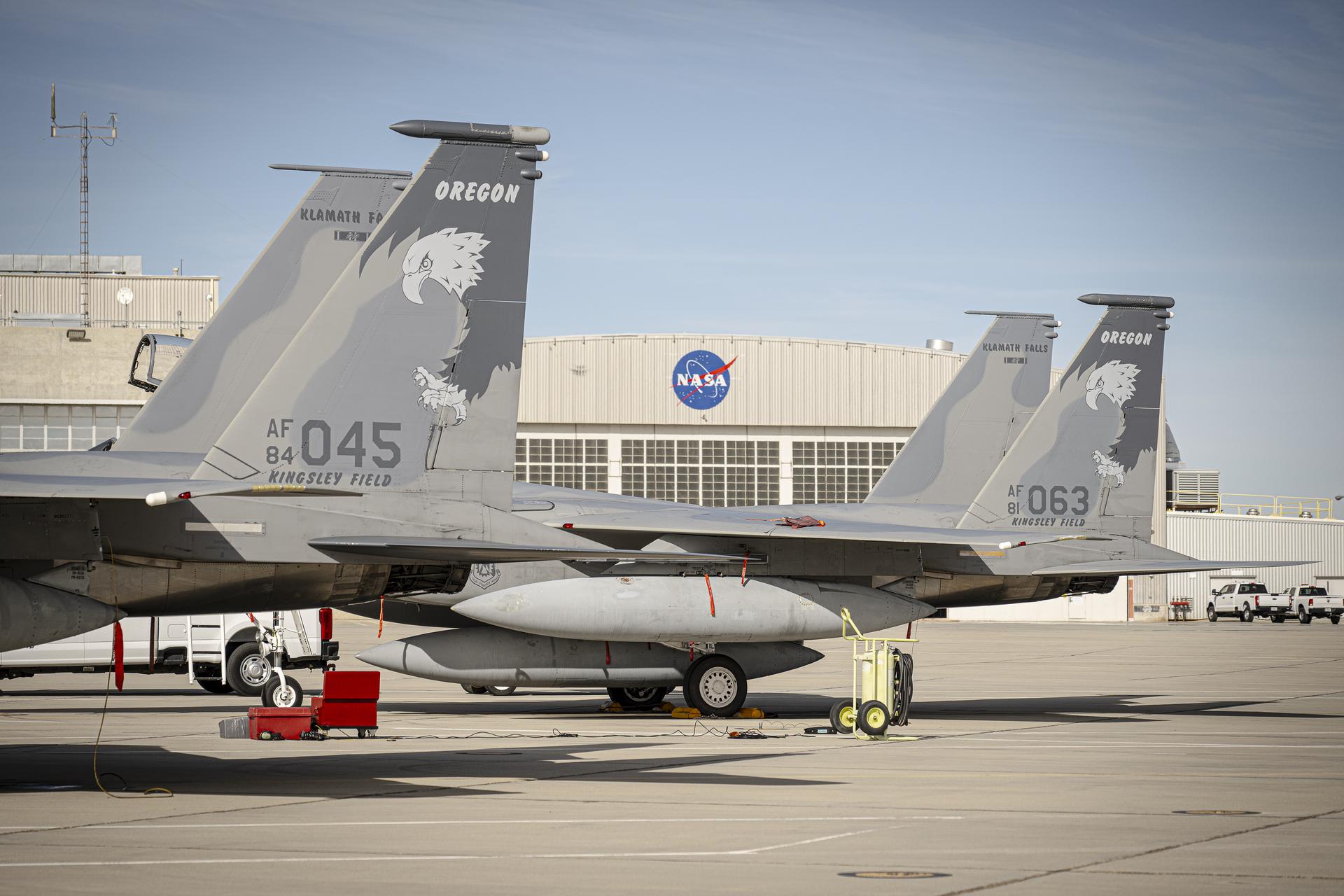
    Two retired U.S. Air Force F-15 jets have joined the flight research fleet at NASA’s Armstrong Flight Research Center in Edwards, California, transitioning from military service to a new role enabling breakthrough advancements in aerospace.

    Advertisement

    The F-15s will support supersonic flight research for NASA’s Flight Demonstrations and Capabilities project, including testing for the Quesst mission’s X-59 quiet supersonic research aircraft. One of the aircraft will return to the air as an active NASA research aircraft. The second will be used for parts to support long-term fleet sustainment.

    “These two aircraft will enable successful data collection and chase plane capabilities for the X-59 through the life of the Low Boom Flight Demonstrator project” said Troy Asher, director for flight operations at NASA Armstrong. “They will also enable us to resume operations with various external partners, including the Department of War and commercial aviation companies.”

    The aircraft came from the Oregon Air National Guard’s 173rd Fighter Wing at Kingsley Field. After completing their final flights with the Air Force, the two aircraft arrived at NASA Armstrong Dec. 22, 2025. 

    “NASA has been flying F-15s since some of the earliest models came out in the early 1970s,” Asher said. “Dozens of scientific experiments have been flown over the decades on NASA’s F-15s and have made a significant contribution to aeronautics and high-speed flight research.”

    The F-15s allow NASA to operate in high-speed, high-altitude flight-testing environments. The aircraft can carry experimental hardware externally – under its wings or slung under the center – and can be modified to support flight research.

    Now that these aircraft have joined NASA’s fleet, the team at Armstrong can modify their software, systems, and flight controls to suit mission needs. The F-15’s ground clearance allows researchers to install instruments and experiments that would not fit beneath many other aircraft.

    NASA has already been operating two F-15s modified so their pilots can operate more comfortably at up to 60,000 feet, the top of the flight envelop for the X-59, which will cruise at 55,000 feet. The new F-15 that will fly for NASA will receive the same modification, allowing for operations at altitudes most standard aircraft cannot reach. The combination of capability, capacity, and adaptability makes the F-15s uniquely suited for flight research at NASA Armstrong.

    “The priority is for them to successfully support the X-59 through completion of that mission,” Asher said. “And over the longer term, these aircraft will help position NASA to continue supporting advanced aeronautics research and partnerships.”

    Advertisement
    Share. Facebook Twitter Pinterest LinkedIn Tumblr Email
    The Tech Guy
    • Website

    Related Posts

    SpaceX Stock Has Now Started to Fall

    June 17, 2026

    Elon Musk Reaches $1.4 Trillion in Net Worth

    June 16, 2026

    Department of Health and Human Services Digital Stockpile & Manufacturing Response Network Challenge

    June 16, 2026

    Japan Thinks Swarms of Transformer Robots Could Explore the Moon

    June 16, 2026

    Woman “Seriously and Permanently Injured” by Egg McMuffin, Lawsuit Alleges

    June 16, 2026

    SpaceX 6th Biggest Most Valuable and Tesla 10th

    June 15, 2026
    Leave A Reply Cancel Reply

    Advertisement
    Top Posts

    You don’t need a NAS to self-host — I proved it with hardware from my closet

    June 7, 202672 Views

    Spotify is giving one of its best playlists a big visual upgrade to give subscribers ‘a closer connection’ to its New Music Friday curators — and I think it could be the update it’s always needed

    June 12, 202618 Views

    The iPad Air brand makes no sense – it needs a rethink

    October 12, 202516 Views
    Stay In Touch
    • Facebook
    • YouTube
    • TikTok
    • WhatsApp
    • Twitter
    • Instagram
    Advertisement
    About Us
    About Us

    SynapseFlow brings you the latest updates in Technology, AI, and Gadgets from innovations and reviews to future trends. Stay smart, stay updated with the tech world every day!

    Our Picks

    Android 17 stable update is rolling out to Pixel phones

    June 17, 2026

    Samsung phones will soon let you check your pet’s health with a photo

    June 17, 2026

    Magnitude Emerges From Stealth Mode With $10 Million in Funding

    June 17, 2026
    categories
    • AI News & Updates
    • Cybersecurity
    • Future Tech
    • Reviews
    • Software & Apps
    • Tech Gadgets
    Facebook X (Twitter) Instagram Pinterest YouTube Dribbble
    • Homepage
    • About Us
    • Contact Us
    • Privacy Policy
    © 2026 SynapseFlow All Rights Reserved.

    Type above and press Enter to search. Press Esc to cancel.

    Ad Blocker Enabled!
    Ad Blocker Enabled!
    Our website is made possible by displaying online advertisements to our visitors. Please support us by disabling your Ad Blocker.