Close Menu

    Subscribe to Updates

    Get the latest Tech news from SynapseFlow

    What's Hot

    Webinar Today: How Modern Breaches Bypass MFA and Evade Detection

    June 17, 2026

    SpaceX Huge AI Revenue Growth Mirrors Micron But Will Be Bigger

    June 17, 2026

    Google’s new $99 Home Speaker packs 360-degree audio and lets you talk to Gemini

    June 17, 2026
    Facebook X (Twitter) Instagram
    • Homepage
    • About Us
    • Contact Us
    • Privacy Policy
    Facebook X (Twitter) Instagram YouTube
    synapseflow.co.uksynapseflow.co.uk
    • AI News & Updates
    • Cybersecurity
    • Future Tech
    • Reviews
    • Software & Apps
    • Tech Gadgets
    synapseflow.co.uksynapseflow.co.uk
    Home»Future Tech»NASA Reveal Highest Resolution Visible Light and Infrared 3I/Atlas Images
    NASA Reveal Highest Resolution Visible Light and Infrared 3I/Atlas Images
    Future Tech

    NASA Reveal Highest Resolution Visible Light and Infrared 3I/Atlas Images

    The Tech GuyBy The Tech GuyNovember 19, 2025No Comments2 Mins Read0 Views
    Share
    Facebook Twitter LinkedIn Pinterest Email
    Advertisement


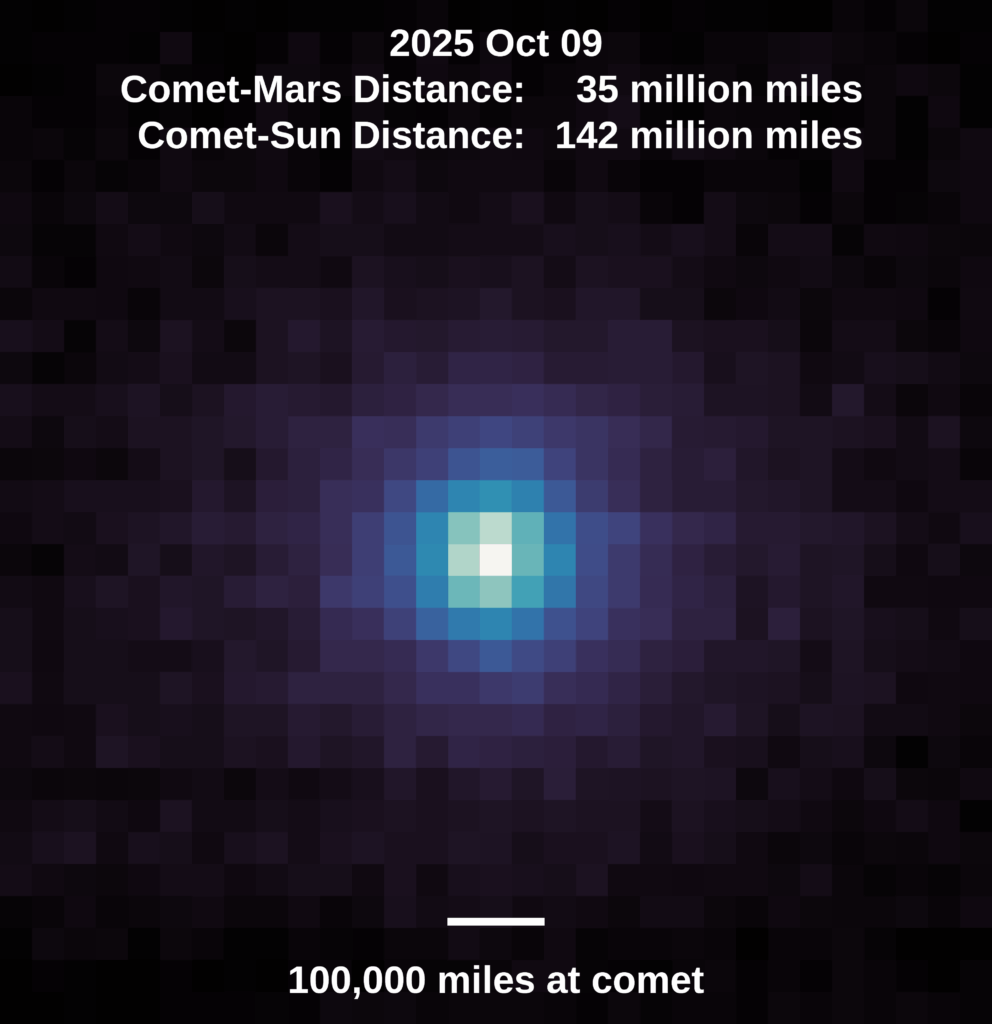
    The 3I/ATLAS comet is only the third object ever identified as entering our solar system from elsewhere in the galaxy. While it poses no threat to Earth and will get no closer than 170 million miles to Earth, the comet flew within 19 million miles of Mars in early October.

    Advertisement

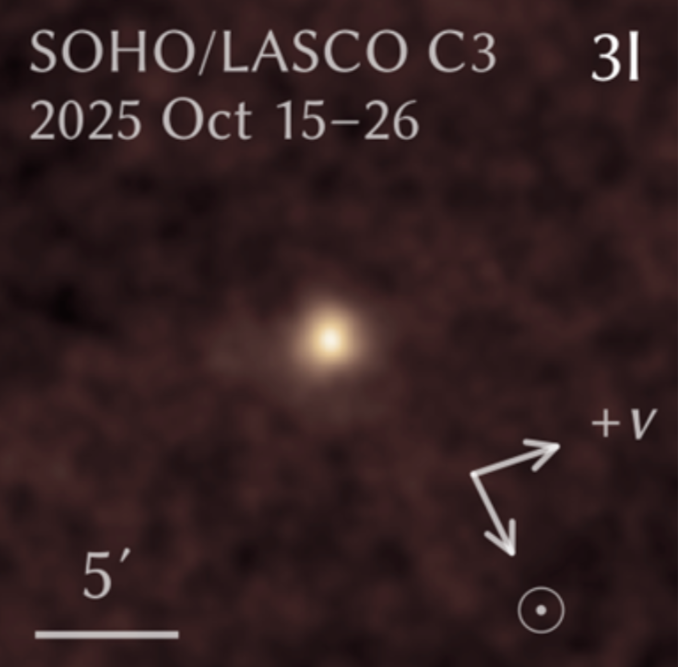
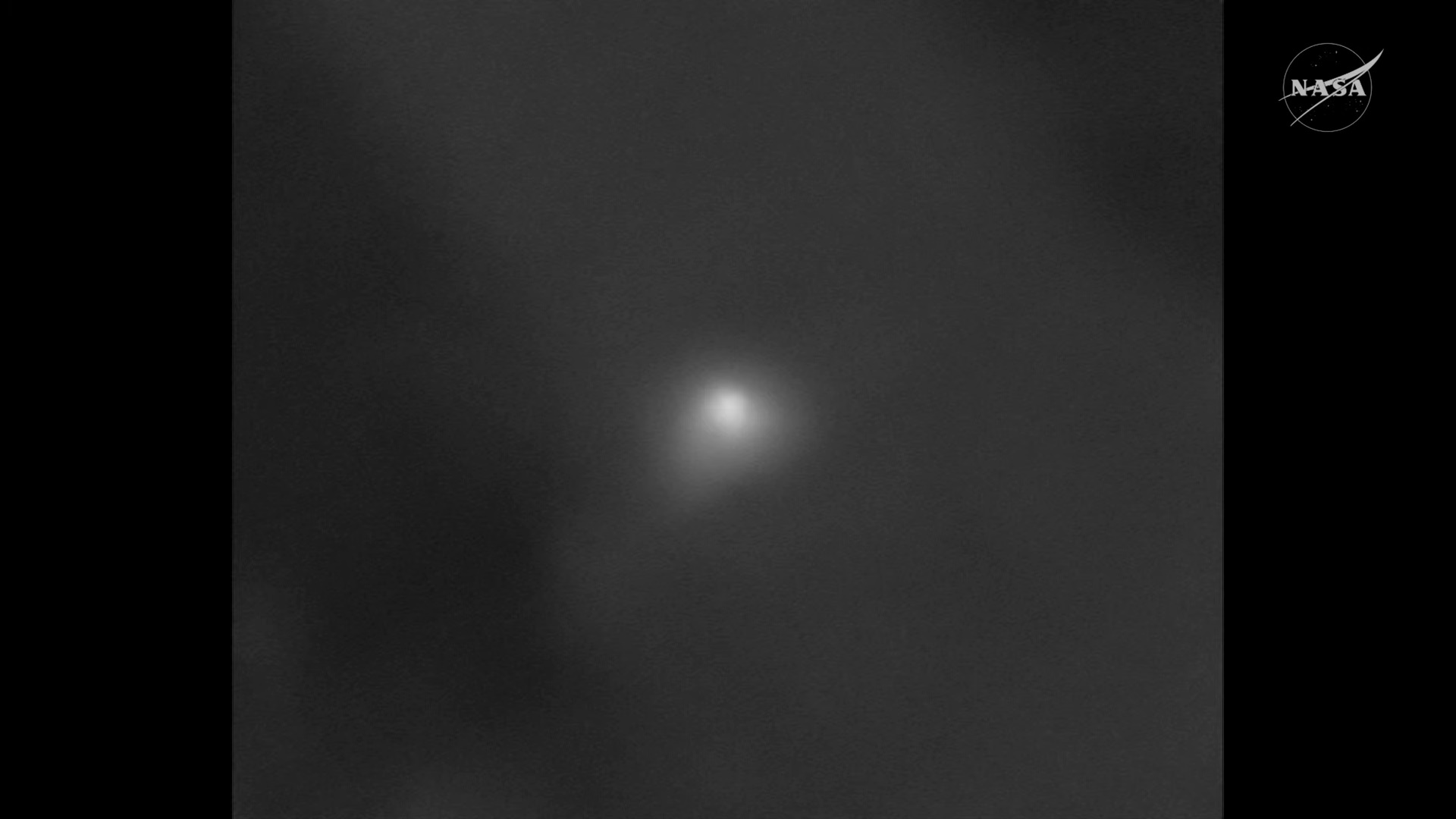
    We still could not resolve the nucleus even with the highest resolution images we will get.

    Above is one of the first HiRise higher resolution image of 3I/Atlas

    Participants in this live event will include:
    – NASA Associate Administrator Amit Kshatriya
    – Nicky Fox, associate administrator, Science Mission Directorate
    – Shawn Domagal-Goldman, acting director, Astrophysics Division
    – Tom Statler, lead scientist for solar system small bodies

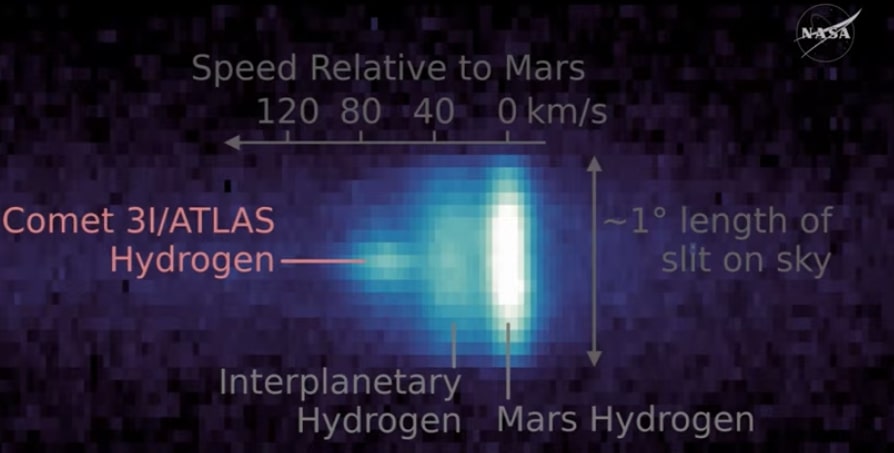
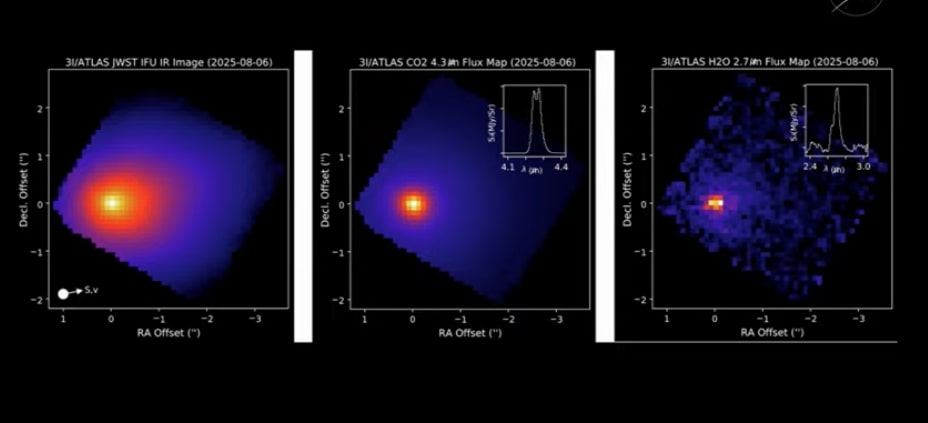
    Spacecraft across the solar system, as well as ground-based observatories, have been able to observe 3I/ATLAS as it passes through our celestial neighborhood and study how the comet behaves.

    In December, the comet will be ~9–10 times farther away from us (and from Earth-orbiting telescopes like Hubble or JWST) than it was from Mars/HiRISE in October. We will have more powerful scopes to look at it. December observations will give us great wide-field views of the tail and activity from a different perspective (and the comet will be post-perihelion and potentially more active), but they will not surpass the spatial detail achieved when it went past Mars.

    Large ground-based earth telescopes (VLT, Gemini, Keck, future Rubin Observatory, etc.) with adaptive optics → Could reach ~100–300 km/pixel if we get ideal weather and other excellent seeing conditions.
    Brian Wang is a Futurist Thought Leader and a popular Science blogger with 1 million readers per month. His blog Nextbigfuture.com is ranked #1 Science News Blog. It covers many disruptive technology and trends including Space, Robotics, Artificial Intelligence, Medicine, Anti-aging Biotechnology, and Nanotechnology.

    Known for identifying cutting edge technologies, he is currently a Co-Founder of a startup and fundraiser for high potential early-stage companies. He is the Head of Research for Allocations for deep technology investments and an Angel Investor at Space Angels.

    A frequent speaker at corporations, he has been a TEDx speaker, a Singularity University speaker and guest at numerous interviews for radio and podcasts.  He is open to public speaking and advising engagements.

    Advertisement
    Share. Facebook Twitter Pinterest LinkedIn Tumblr Email
    The Tech Guy
    • Website

    Related Posts

    SpaceX Huge AI Revenue Growth Mirrors Micron But Will Be Bigger

    June 17, 2026

    Low Water at San Carlos Reservoir

    June 17, 2026

    SpaceX Stock Has Now Started to Fall

    June 17, 2026

    Elon Musk Reaches $1.4 Trillion in Net Worth

    June 16, 2026

    Department of Health and Human Services Digital Stockpile & Manufacturing Response Network Challenge

    June 16, 2026

    Japan Thinks Swarms of Transformer Robots Could Explore the Moon

    June 16, 2026
    Leave A Reply Cancel Reply

    Advertisement
    Top Posts

    You don’t need a NAS to self-host — I proved it with hardware from my closet

    June 7, 202672 Views

    Spotify is giving one of its best playlists a big visual upgrade to give subscribers ‘a closer connection’ to its New Music Friday curators — and I think it could be the update it’s always needed

    June 12, 202618 Views

    The iPad Air brand makes no sense – it needs a rethink

    October 12, 202516 Views
    Stay In Touch
    • Facebook
    • YouTube
    • TikTok
    • WhatsApp
    • Twitter
    • Instagram
    Advertisement
    About Us
    About Us

    SynapseFlow brings you the latest updates in Technology, AI, and Gadgets from innovations and reviews to future trends. Stay smart, stay updated with the tech world every day!

    Our Picks

    Webinar Today: How Modern Breaches Bypass MFA and Evade Detection

    June 17, 2026

    SpaceX Huge AI Revenue Growth Mirrors Micron But Will Be Bigger

    June 17, 2026

    Google’s new $99 Home Speaker packs 360-degree audio and lets you talk to Gemini

    June 17, 2026
    categories
    • AI News & Updates
    • Cybersecurity
    • Future Tech
    • Reviews
    • Software & Apps
    • Tech Gadgets
    Facebook X (Twitter) Instagram Pinterest YouTube Dribbble
    • Homepage
    • About Us
    • Contact Us
    • Privacy Policy
    © 2026 SynapseFlow All Rights Reserved.

    Type above and press Enter to search. Press Esc to cancel.

    Ad Blocker Enabled!
    Ad Blocker Enabled!
    Our website is made possible by displaying online advertisements to our visitors. Please support us by disabling your Ad Blocker.