

Close Menu

    Subscribe to Updates

    Get the latest Tech news from SynapseFlow

    What's Hot

    Bulletproof Host Virtualine Loses Its Domain to FBI Seizure

    October 30, 2026

    November’s Night Sky Notes: Light-Day Away

    October 30, 2026

    Vivo X Fold6 Review: This is the foldable I’d buy for the cameras. The rest isn’t bad either.

    October 30, 2026
    Facebook X (Twitter) Instagram
    • Homepage
    • About Us
    • Contact Us
    • Privacy Policy
    Facebook X (Twitter) Instagram YouTube
    synapseflow.co.uksynapseflow.co.uk
    • AI News & Updates
    • Cybersecurity
    • Future Tech
    • Reviews
    • Software & Apps
    • Tech Gadgets
    synapseflow.co.uksynapseflow.co.uk
    Home»Future Tech»November’s Night Sky Notes: Light-Day Away
    November’s Night Sky Notes: Light-Day Away
    Future Tech

    November’s Night Sky Notes: Light-Day Away

    The Tech GuyBy The Tech GuyOctober 30, 2026No Comments3 Mins Read0 Views
    Share
    Facebook Twitter LinkedIn Pinterest Email
    Advertisement


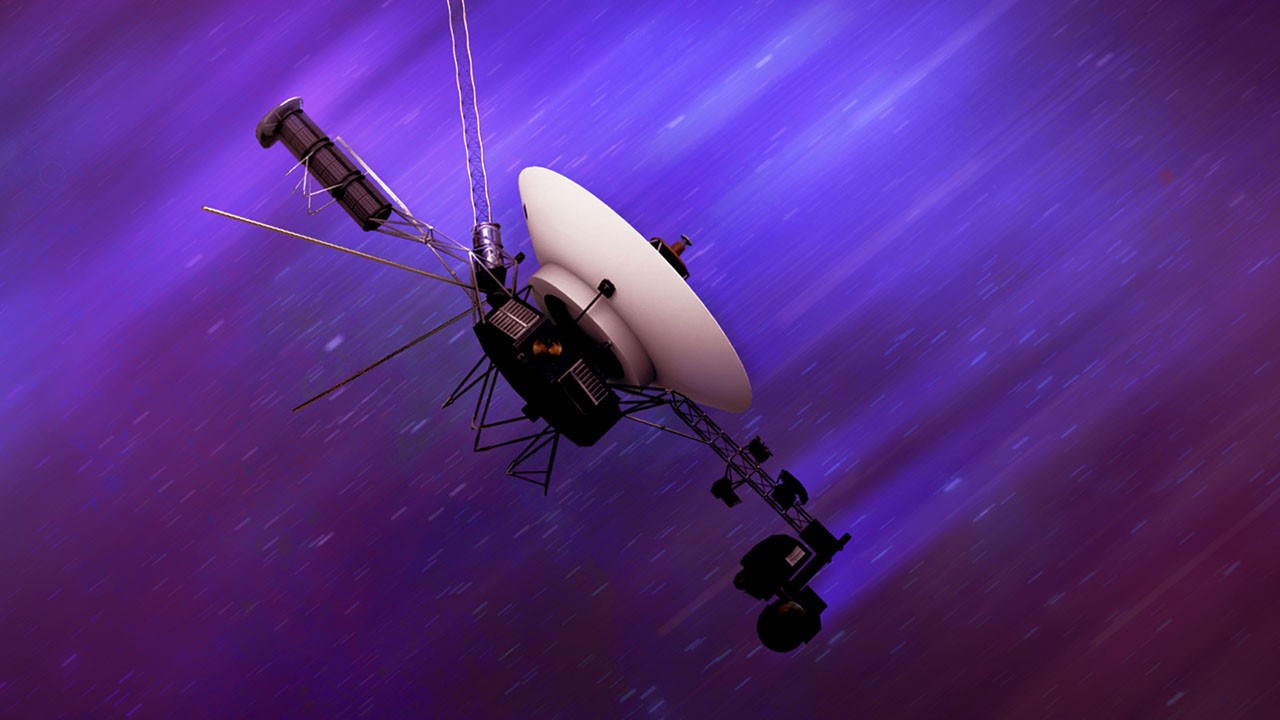
    In 1977, NASA launched twin spacecraft Voyager 1 and 2, taking advantage of a once-every-175-year planetary alignment of the four largest planets in our solar system: Jupiter, Saturn, Uranus, and Neptune. Using six gravity assists between them, this Grand Tour gave us up-close views of the gas and ice giants, including several moons. By the 1980s, the two probes went their separate ways at Saturn. As Voyager 2 continued toward Uranus and Neptune, Voyager 1 grabbed one more portrait of the solar system (excluding Mercury and Mars), including a final image of the pale blue dot we call home.

    Advertisement

    “Hello from the children of planet Earth.”

    Every good road trip needs some music to match. In this case, each craft carries the Golden Record, a 12-inch phonograph record with spoken greetings in 55 languages, 27 musical tracks, 116 images, and other sounds from Earth. Each record is protected by an outer cover featuring etchings showing our Sun’s location relative to 14 pulsars, along with instructions on how to play it. The design used various metals to protect the information encoded from space radiation: the record used copper and gold plating, and the cover used aluminum. The cover was electroplated with an ultra-pure sample of the isotope uranium-238. Uranium-238 has a half-life of 4.468 billion years.

    Did you know that a light-minute is a measure of distance, not time? In August 2012 and November 2018, Voyager 1 and 2 crossed the heliopause, the boundary where the Sun’s solar wind meets the interstellar medium. Using NASA’s Deep Space Network, Earth communicates with both spacecraft and tracks each on its journey. At the time of this article, the Canberra antenna tracked Voyager 1 at 25.80 billion km, or just over 16 billion miles.

    On November 18, 2026, 49 years after its launch, Voyager 1 will cross the one-light-day mark, 16.1 billion miles from the Sun. You may have heard the term light-year in your favorite sci-fi movie or show, or when stargazing and referring to an object outside of our solar system. This video best demonstrates the different distances between the inner solar system, outer solar system, and beyond, using light measurements. Additionally, track each Voyager spacecraft here.

    You can get a real understanding of what a gravity assist might be like with our Gravity Assist activity and learn what it’s like to measure a “light minute” with our Measuring a Kid Minute activity guide!

    Advertisement
    Share. Facebook Twitter Pinterest LinkedIn Tumblr Email
    The Tech Guy
    • Website

    Related Posts

    CRISPR Prime Editing Rewrites DNA in the Human Body for the First Time

    October 30, 2026

    Netflix Turns Horrific Social Experiment Into Reality TV Show

    October 30, 2026

    SpaceX Starlink in Talks to Stream Skydance Movies and Shows – NextBigFuture.com

    October 29, 2026

    APOD: 29 October 2026 – The Horns of Venus

    October 29, 2026

    The Hinge on Apple’s Constantly Breaking New Foldable iPhone Was “Built With AI”

    October 29, 2026

    Likely 40 Tesla Robotaxi in Each of Houston, Tampa, Miami and Orlando – NextBigFuture.com

    October 29, 2026
    Leave A Reply Cancel Reply

    Advertisement
    Top Posts

    You don’t need a NAS to self-host — I proved it with hardware from my closet

    June 7, 2026394 Views

    Spotify is giving one of its best playlists a big visual upgrade to give subscribers ‘a closer connection’ to its New Music Friday curators — and I think it could be the update it’s always needed

    June 12, 2026211 Views

    The iPad Air brand makes no sense – it needs a rethink

    October 12, 202517 Views
    Stay In Touch
    • Facebook
    • YouTube
    • TikTok
    • WhatsApp
    • Twitter
    • Instagram
    Advertisement
    About Us
    About Us

    SynapseFlow brings you the latest updates in Technology, AI, and Gadgets from innovations and reviews to future trends. Stay smart, stay updated with the tech world every day!

    Our Picks

    Bulletproof Host Virtualine Loses Its Domain to FBI Seizure

    October 30, 2026

    November’s Night Sky Notes: Light-Day Away

    October 30, 2026

    Vivo X Fold6 Review: This is the foldable I’d buy for the cameras. The rest isn’t bad either.

    October 30, 2026
    categories
    • AI News & Updates
    • Cybersecurity
    • Future Tech
    • Reviews
    • Software & Apps
    • Tech Gadgets
    Facebook X (Twitter) Instagram Pinterest YouTube Dribbble
    • Homepage
    • About Us
    • Contact Us
    • Privacy Policy
    © 2026 SynapseFlow All Rights Reserved.

    Type above and press Enter to search. Press Esc to cancel.

    Ad Blocker Enabled!
    Ad Blocker Enabled!
    Our website is made possible by displaying online advertisements to our visitors. Please support us by disabling your Ad Blocker.