

Close Menu

    Subscribe to Updates

    Get the latest Tech news from SynapseFlow

    What's Hot

    Dark Matter Season 2 is off to a strong start, though I’m left with questions I hope get answered

    September 1, 2026

    Watch ‘The Walking Dead’, UFC, and 100+ free channels on your PS5 with no subscription

    September 1, 2026

    The Philips Baristina is ‘unlike any other bean-to-cup machine’ we’ve tested — and with 26% off, it’s affordable too

    September 1, 2026
    Facebook X (Twitter) Instagram
    • Homepage
    • About Us
    • Contact Us
    • Privacy Policy
    Facebook X (Twitter) Instagram YouTube
    synapseflow.co.uksynapseflow.co.uk
    • AI News & Updates
    • Cybersecurity
    • Future Tech
    • Reviews
    • Software & Apps
    • Tech Gadgets
    synapseflow.co.uksynapseflow.co.uk
    Home»Software & Apps»Engineers just solved 3D printing’s biggest structural weakness with a computational model
    Engineers just solved 3D printing’s biggest structural weakness with a computational model
    Software & Apps

    Engineers just solved 3D printing’s biggest structural weakness with a computational model

    The Tech GuyBy The Tech GuyAugust 31, 2026No Comments3 Mins Read0 Views
    Share
    Facebook Twitter LinkedIn Pinterest Email
    Advertisement


    Summary

    • New computational model predicts optimal temperatures and speeds to strengthen interlayer bonding in FFF prints.
    • Saves time/material and cuts trial-and-error by auto-tuning print conditions for reliable strength.
    • Integrates with slicers or sensors for dynamic control; enables stronger, production-ready parts.

    Advertisement

    A new computational model for Fused Filament Fabrication (FFF) 3D printing directly addresses one of the biggest problems with 3D-printed parts: weak bonds between layers.

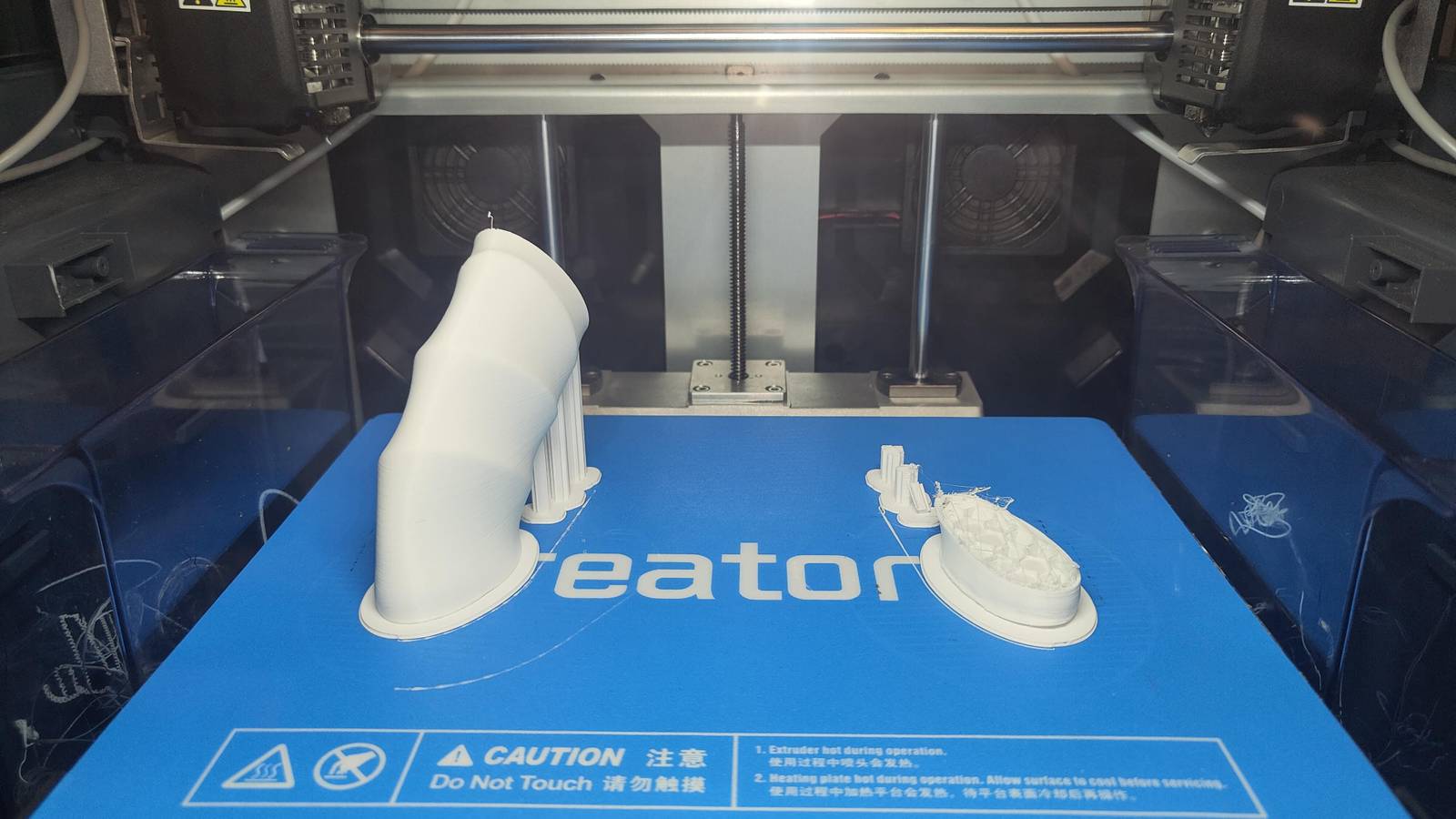
    In regular 3D printing, objects are made by stacking up thin layers of melted plastic. The places where these layers touch are usually the first to break when the object is stressed, leading to cracks or splits. Whether you’re a hobbyist or a student, this breakthrough means your 3D prints will be much stronger and less likely to split apart between layers, saving you valuable time. Instead of guessing at the right print settings or wasting time and material on trial and error, you can use this new method to get reliable results right away.


    A failed 3D print of a vase in a 3D printer as a result of layers separating


    These 5 settings turned my prints from spaghetti into things I’d give as gifts

    Five slicer tweaks stand between a pile of regret and something worth wrapping in a bow.

    It’s a surprisingly simple, but elegant solution

    This will save you so much time and material!

    A new model by Berkcan Kapusuzoglu, Matthew Sato, Sankaran Mahadevan, and Paul Witherell is the result of a computational study backed by desktop-printer experiments for calibration and validation. It predicts the optimal temperature and printing conditions to help the melted plastic from each layer mix more effectively with the next, making the part stronger. It takes into account things like how quickly the printed part cools, the surrounding temperature, and how fast the printer is moving. By crunching these numbers, the model can tell the printer exactly how fast to move and what temperatures to use in different parts of a print, so that the layers stick together as strongly as possible.

    For engineering students, it’s especially useful: you’ll have better control over your experiments and prototypes, which means you can collect more accurate data and trust your results, leading to better grades and more successful projects.

    3d printing gone wrong dremel

    Wider implementation of this research can be achieved by combining software and hardware. The mathematical models can be incorporated into CAM slicing programs so that print speeds and extrusion temperatures are automatically adjusted based on the part’s local geometry. Industrial FFF systems can combine predictive algorithms with real-time infrared thermal sensors to dynamically adjust print settings during printing. Moreover, using the model with engineering-grade polymers such as ABS, polycarbonate, and nylon ensures that end-use manufacturing components have consistent structural integrity.

    Some industry-leading commercial FFF systems are beginning to employ basic thermal monitoring to adjust print parameters, and a few open-source tools have begun experimenting with plugin frameworks that allow limited thermal adjustment. However, widespread adoption of comprehensive computational modeling within mainstream slicers is still in progress. Nevertheless, these sophisticated mathematical methods provide a foundation for more predictable and structurally sound 3D printing at all hardware levels.

    Advertisement
    Share. Facebook Twitter Pinterest LinkedIn Tumblr Email
    The Tech Guy
    • Website

    Related Posts

    Watch ‘The Walking Dead’, UFC, and 100+ free channels on your PS5 with no subscription

    September 1, 2026

    Which agent is best for Windows tasks: Hermes Agent vs LangGraph vs AutoGen

    August 31, 2026

    6 movies you’ve already seen that are secretly The Count of Monte Cristo

    August 31, 2026

    Amazon just gave Kindle owners two new reasons to look at Kobo

    August 30, 2026

    System and reserved taking up too much space in Windows 11

    August 30, 2026

    Must-see Marvel movies to watch if you’ve never seen a single one

    August 30, 2026
    Leave A Reply Cancel Reply

    Advertisement
    Top Posts

    You don’t need a NAS to self-host — I proved it with hardware from my closet

    June 7, 2026391 Views

    Spotify is giving one of its best playlists a big visual upgrade to give subscribers ‘a closer connection’ to its New Music Friday curators — and I think it could be the update it’s always needed

    June 12, 2026210 Views

    The iPad Air brand makes no sense – it needs a rethink

    October 12, 202517 Views
    Stay In Touch
    • Facebook
    • YouTube
    • TikTok
    • WhatsApp
    • Twitter
    • Instagram
    Advertisement
    About Us
    About Us

    SynapseFlow brings you the latest updates in Technology, AI, and Gadgets from innovations and reviews to future trends. Stay smart, stay updated with the tech world every day!

    Our Picks

    Dark Matter Season 2 is off to a strong start, though I’m left with questions I hope get answered

    September 1, 2026

    Watch ‘The Walking Dead’, UFC, and 100+ free channels on your PS5 with no subscription

    September 1, 2026

    The Philips Baristina is ‘unlike any other bean-to-cup machine’ we’ve tested — and with 26% off, it’s affordable too

    September 1, 2026
    categories
    • AI News & Updates
    • Cybersecurity
    • Future Tech
    • Reviews
    • Software & Apps
    • Tech Gadgets
    Facebook X (Twitter) Instagram Pinterest YouTube Dribbble
    • Homepage
    • About Us
    • Contact Us
    • Privacy Policy
    © 2026 SynapseFlow All Rights Reserved.

    Type above and press Enter to search. Press Esc to cancel.

    Ad Blocker Enabled!
    Ad Blocker Enabled!
    Our website is made possible by displaying online advertisements to our visitors. Please support us by disabling your Ad Blocker.