

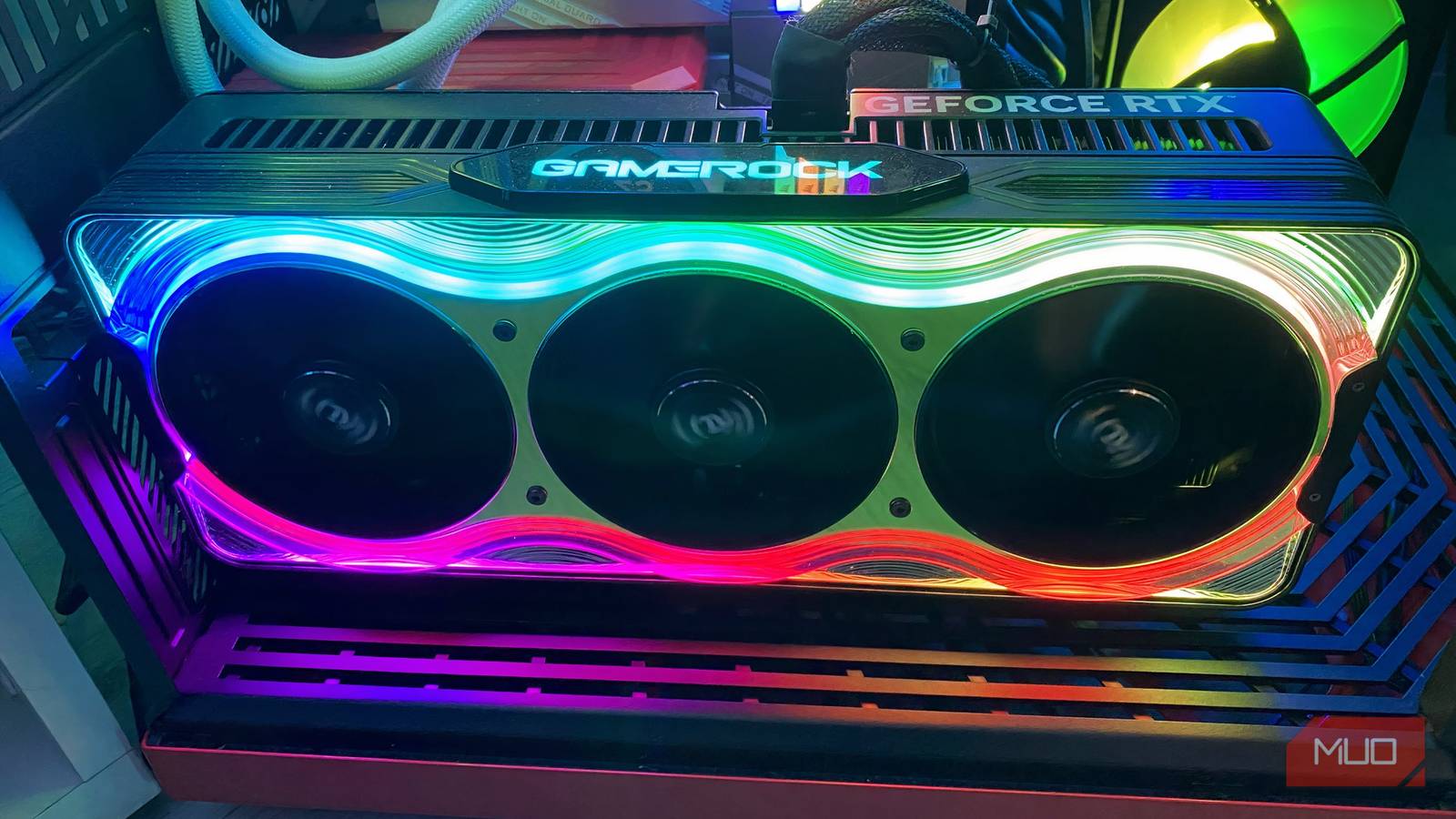

When the GTX 10-Series GPUs first launched, a friend of mine got the higher-end GTX 1080 on release. It lasted him at least four years, and during that time the GPU still performed at its peak before it eventually got outdated, as every other piece of hardware does.
However, this was the time when flagship hardware actually meant something, a far cry from what we see today. This is because priorities in newer GPU releases have shifted, and they lean more toward software advancements, which can make them feel outdated as soon as the next lineup drops.
To make matters worse, the newest high-end GPUs aren’t even available at MSRP because of AI demand, and in these situations, I don’t think buying a flagship GPU is a worthwhile investment.
Nvidia now sells software, not silicon
DLSS 5 and MFG 6X launched as RTX 50 exclusives
Raw performance means little today, when AI features have taken over and completely shifted the performance landscape. Hardware power for modern GPUs is minimal. Instead, the real work happens on the software side through expanded feature sets.
DLSS is a prime example of what I’m talking about. Nvidia’s proprietary technology has done a great job squeezing more performance out of weaker GPUs. However, that intention has been lost in recent iterations, and each new release adds feature sets that have nothing to do with performance, such as DLSS 5’s Neural Rendering.
These new features are also locked to the last-released GPU generation, which doesn’t help either. Aside from DLSS 5, the MFG (Multi-Frame Generation) above 2X is technically only available on the RTX 50-Series, though it is available on other RTX GPUs using the RTX Swapper Mod.
Street prices have outrun MSRP
The RTX 5090 sells for $5,000 or more against a $1,999 list price

MSRP is no longer a metric for pricing a new PC because street prices are far above what manufacturers sell these components for. Again, the RTX 50 Series is a great example, and the higher-end Blackwell cards have sold well above retail since they launched nearly two years ago.
The RTX 5090 launched at an MSRP of $1,999, but new listings in October 2026 range from $5,000 to a whopping $8,500. That is, if you can even find one these days, because most of the stock is being hogged by data centers. Even the RTX 3060 12GB, a five-year-old GPU that was recently re-released, is above its newer MSRP of $330-$340 and is being sold for over $100 more, which is absurd.
Other components aren’t safe from this either. The snowball effect has driven price increases for CPUs, motherboards, PSUs, and more because the AI surge has caused a broader component shortage, not just memory.
Skip the flagship until prices settle
Memory shortages and a slower Nvidia release cycle push relief into late 2027 or beyond

Fortunately, the memory situation is easing up, not because the AI bubble is bursting, but because manufacturers have sped up production and new players like China’s CXMT are now aiming to meet demand. Memory prices are likely to decrease soon, perhaps in 2027, but don’t expect them to return to pre-AI-boom levels.
Nvidia isn’t even releasing any new products in 2027, according to rumors, because manufacturing costs are high. When the RTX 60 Series GPU does release, I expect it to be much better than the Blackwell cards, both in price and in terms of the technical issues that plagued the RTX 50-Series cards at launch, such as the 16-pin 12V-2×6 power connector burning, and the missing ROPs.
Buying a flagship GPU right now at 2.5–4x its MSRP is a bad investment, and waiting a year may let you buy better GPUs from both AMD and Nvidia at much better prices.
That said, next-gen GPUs will be a much bigger upgrade and deliver the results of AMD and Nvidia’s new technologies. AMD will offer much more, thanks to its work alongside Xbox and PlayStation on next-generation consoles. This will also reportedly mark Team Red’s return to the flagship tier after many years.
Mid-range cards deliver most of the performance for far less money
To get a flagship component, whether it’s a GPU, CPU, or anything else, you’d need top-of-the-line parts for everything, and that adds up to a huge price. You get diminishing returns at that price anyway, with a cheaper mid-range option.
Instead, I recommend mid-range products like AMD’s RX 9000 cards or anything from the RTX 40-Series, because DLSS 5 alone isn’t worth spending thousands of dollars on a Blackwell card.
On the other hand, MFG isn’t feasible in most cases because of drawbacks like increased latency, visual artifacts, and more, and it hides true performance. I don’t like fake frames, and many gamers will agree with me on that statement.
Normally, I wouldn’t suggest delaying a GPU purchase until next year, but I’m optimistic that the hardware landscape will improve and prices will ease up, so waiting will most certainly pay off.
