



Robert Triggs / Android Authority
Add Android Authority on Google:
If there’s been one major game changer for smartphone hardware in the past few years, it’s undoubtedly the adoption of silicon-carbon (Si-C) battery technology. By mixing traditional lithium-ion cells with silicon-carbon, manufacturers are able to greatly increase a battery’s storage capacity without a huge increase in its physical size, meaning better longevity for our smartphones.
Even small amounts of added Si-C have been a game changer for battery capacities. After being stuck with 5,000mAh Li-ion cells as the upper limit for the best part of a decade, we’ve quickly seen capacities jump to 7,000mAh, 8,000mAh, and even 10,000mAh cells in the most advanced cases.
As you’d expect, this has led to a significant leap in screen on time. While two days was perhaps pushing it in years gone by, these larger batteries easily last two days and can regularly push into a third with lighter use. It feels like we’re not far off returning to the days of only need to remember to charge our phones a couple of times a week.
Si-C batteries open the door to multi-day battery life, but at a cost.
Speaking of, charging has becomes a bit of a problem with these larger batteries. They’re rather sluggishly to fill up.
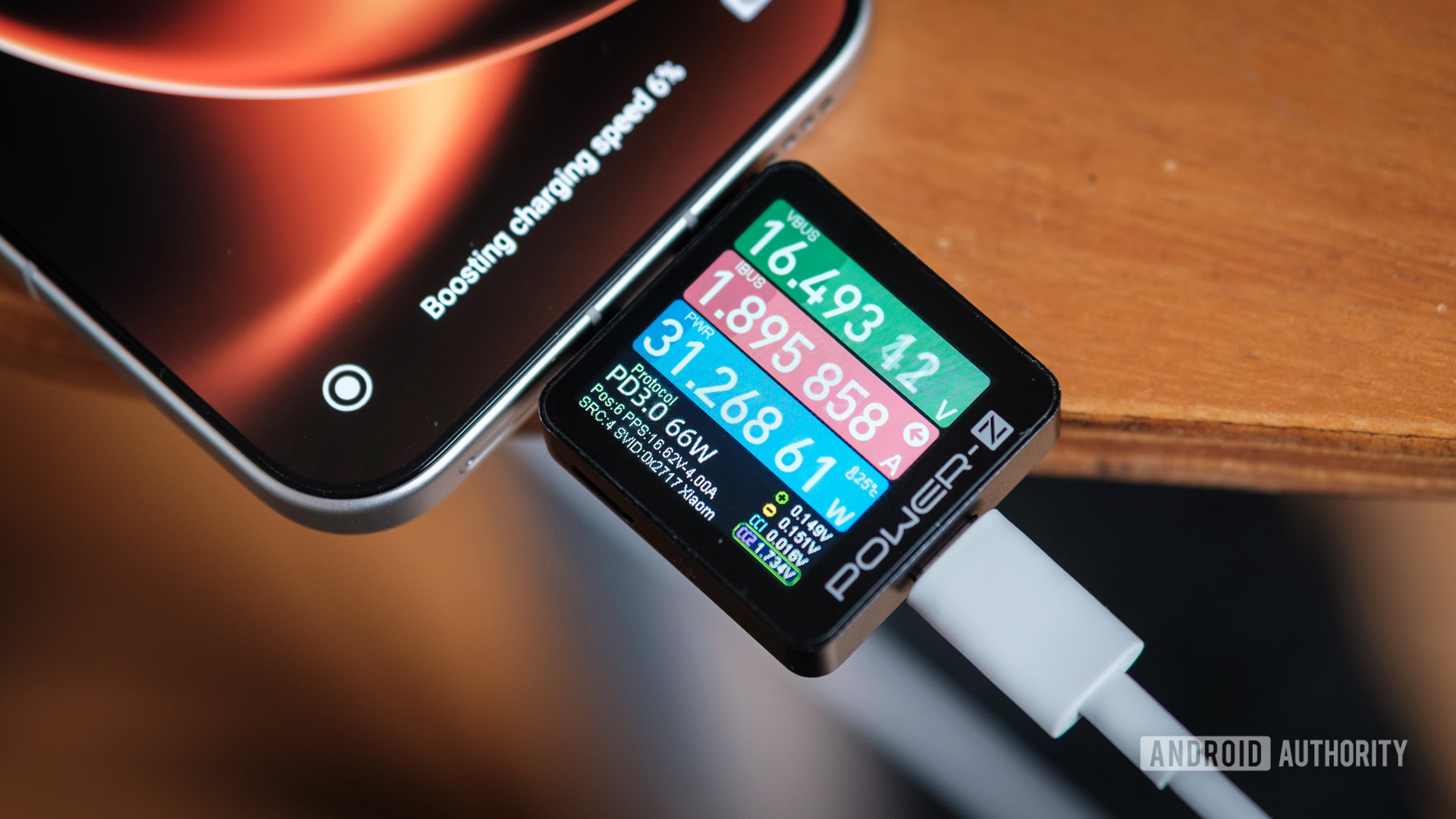
Of course, you would expect a larger battery to take a longer time to charge than a small one. But I’ve crunched the numbers and checked out the power metrics, and the adoption of Si-C batteries has coincided with a general slow down in per mAh charging times.
OPPO’s Find X series is a good example, having transitioned to its first Si-C cell three generation ago, and now packing a huge 8,000mAh battery into some regional versions of its latest Find X10 Pro Max. Unfortunately, the huge increase in battery capacity has also led to SuperVOOC chargers pushing far fewer milliamp hours per minute into the phone.
| Battery mAh | Mean Charging Power | Minutes to Full | mAh charged per minute | |
|---|---|---|---|---|
|
OPPO Find X7 Ultra (Li-Ion) |
Battery mAh
5000 |
Mean Charging Power
46.5 W |
Minutes to Full
25 |
mAh charged per minute
200.0 |
|
OPPO Find X8 Pro (Si-C) |
Battery mAh
5910 |
Mean Charging Power
28.2 W |
Minutes to Full
51 |
mAh charged per minute
115.9 |
|
OPPO Find X9 Ultra (Si-C) |
Battery mAh
7050 |
Mean Charging Power
33.2 W |
Minutes to Full
56 |
mAh charged per minute
125.9 |
|
OPPO Find X10 Pro Max (Si-C) |
Battery mAh
8000 |
Mean Charging Power
27.1 W |
Minutes to Full
80 |
mAh charged per minute
100.0 |
As the table above clearly shows, the move to Si-C has produced much larger batteries, but OPPO is also pushing almost half as much power into the cells per minute on average over its charge cycle, resulting in a slower overall rate of charge regardless of the battery size. To make it crystal clear, full charge times between the Find X7 Ultra and Find X10 Pro Max now take 220% (2.2x) longer but the battery capacity is “only” 60% larger.
This phenomenon isn’t restricted to OPPO, late 2026’s REDMAGIC 12 Pro (8,400mAh), vivo X500 Pro Max (7,800mAh), and the Redmi Note 17 Pro Max (10,000mAh) all take 75 minutes or longer to fill up the tank. They also all share a very similar charging profile, providing only a short high-power spike when first plugged in before charging closer to or even below 30W for the bulk of their charging cycle. The only exception I’ve seen to this rule is the last-gen OnePlus 15, which is able to fill its 7,300mAh Si-C battery in under an hour by providing power above 50W for a good portion of its early charge cycle.

Brands previously known for blazing fast charging and starting to look sluggish.
At first, you might think that brands are simply playing it safe with this new Si-C technology, but that’s unlikely to be the whole story. Silicon-carbon improved electron mobility that should, in theory, allow for for equally or even better fast-charging capabilities in the right circumstances. Si-C isn’t inherently worse at fast charging than conventional lithium-ion chemistry.
So why are manufacturers seemingly holding back on charging speeds despite the adoption of higher-capacity silicon-carbon batteries? Well, battery longevity is likely a major part of the equation. While Si-C technology offers substantially greater energy density, silicon introduces some additional challenges compared to traditional graphite-based anodes, particularly around electrode expansion, degradation and long-term cycle life. Slowing charging speeds and keeping operating temperatures lower could help mitigate some of these issues, allowing manufacturers to deliver the capacity benefits of Si-C without compromising the battery longevity consumers expect. In other words, manufacturers may be prioritising battery longevity over charging speed, ensuring that cells last as long as established lithium-ion alternatives before requiring a replacement.
Should you buy a Si-C phone in 2027?

Robert Triggs / Android Authority
A bigger battery is undoubtedly appealing, but is it actually worth the trade-off? Silicon-carbon phones promise substantially longer battery life, but that extra capacity comes with a downside: considerably longer charging times. If you’re someone who plugs in their phone every night, having enough battery to last two or even three days might not make much difference to your daily routine. In fact, you could end up spending more time waiting for your phone to charge than you would with a smaller, conventional lithium-ion battery.
That’s not to say Si-C batteries aren’t worthwhile. Having extra capacity is great for heavy users, frequent travellers, or anyone who regularly finds themselves away from a charger. They’re even more useful for thin-profile foldable phones, like the Samsung Galaxy Z Fold 8 Ultra, that have typically struggled to match the longevity of traditional flagship phones. But the practical benefits of a colossal battery might not always be quite as compelling as the numbers suggest.
For instance, Samsung’s 60W charging Galaxy S26 Ultra now fills its reasonably large 5,000mAh Li-ion battery in just 42 minutes. You’d have to wait half an hour more to fill the 8,000mAh OPPO Find X10 Pro Max, which hardly seems worth it if you tend to charge your phone well before its out of juice.

Shimul Sood / Android Authority
As a crude, purely illustrative example, lets say that the typical user (and phone) requires about 3,000mAh in the tank to get through a full day.
The Samsung Galaxy S26 Ultra provides that after only 17 minutes on the plug, while Google’s slower, Li-ion powered Pixel 11 Pro XL takes about 25 minutes to top up around 3,000mAh of capacity. For Si-C phones, the OPPO Find X10 Pro Max takes 21 minutes to reach a similar capacity, while the vivo X500 Pro Max takes about 25 minutes in our testing.
It really depends on the handset, then. But we’re talking a matter of minutes difference between typical Li-ion and Si-C handsets, in terms of how long you need to leave them on the charger in order to get at least one full day’s worth of juice in the tank.
If you’re content charging every day, Si-C has little benefit for you.
With that in mind, deciding whether you need a phone with such a colossal battery really comes down to your charging habits. If you regularly leave your phone on the charger overnight, mainstream 5,000mAh Li-ion phones are probably already providing a full day of use with power to spare. Having enough capacity for another day or two sounds great, but how often will you actually need it?
However, if you regularly forget to charge your phone (like me), travel frequently, or simply enjoy the freedom of going several days without reaching for an outlet, Si-C batteries are a compelling upgrade. Just be prepared to leave them on the charger a little longer when you do eventually need a full charge. The real value of Si-C isn’t necessarily that it makes your phone last longer every day. It’s that it gives you more flexibility when you need it.
