

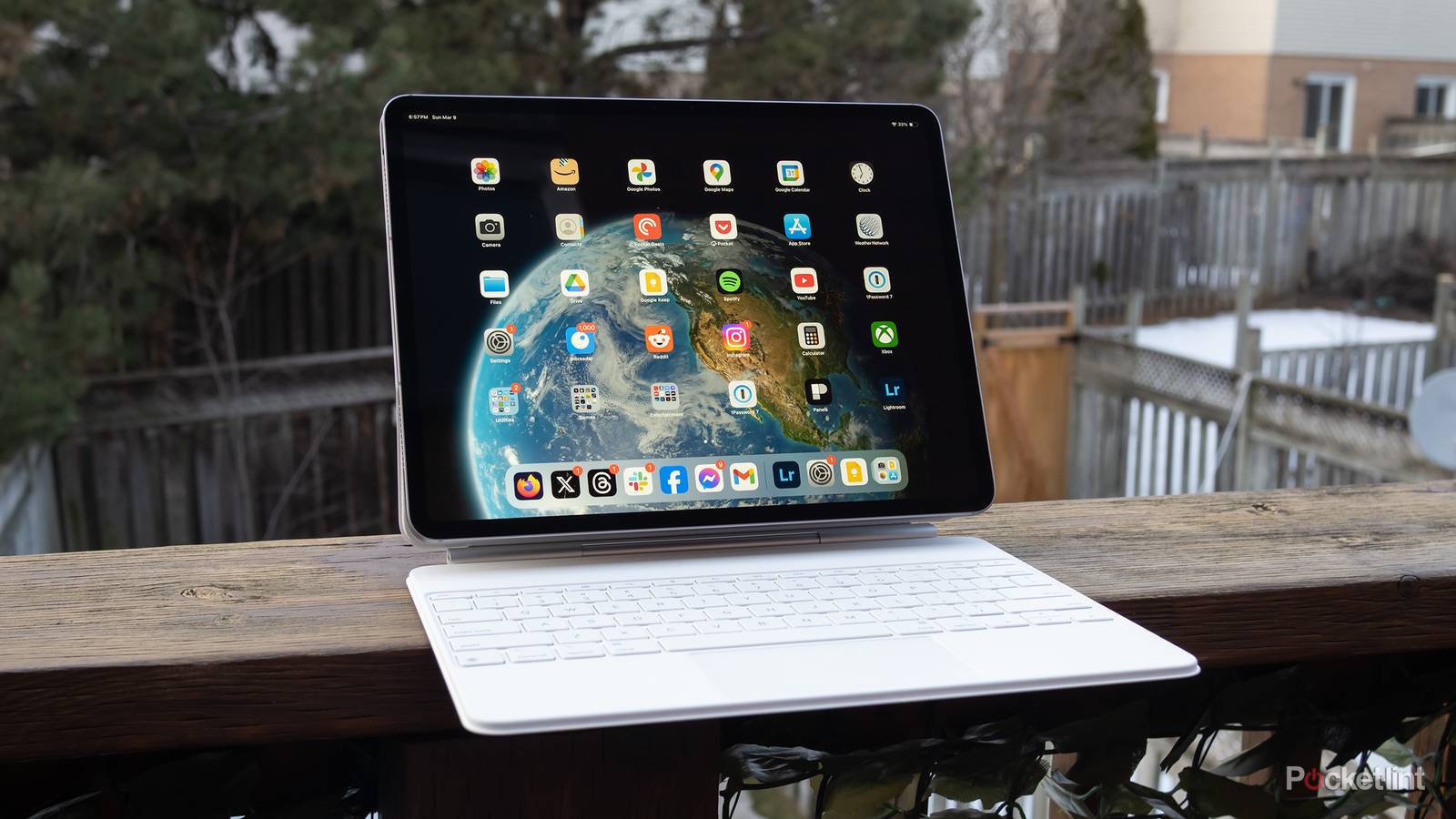

iPads tend to hold their performance edge for quite a while. That probably wasn’t Apple’s goal, however. Rather, the company has allowed processor power to vastly exceed the demands of most iPadOS apps. You don’t need an M5 iPad Pro to check your email, comment on Reddit, or watch YouTube videos. My 2020 Pro handles those tasks and more with ease.
My tablet is getting a bit sluggish though, so I decided to investigate options to keep it running smoothly for a little while longer. As it turns out, there are several software tricks that can achieve minor gains, a couple of which I hadn’t even considered. I will have to bite the bullet at some point, likely in 2027.

- Brand
-
Apple
- Storage
-
128GB, 256GB, 512GB, 1TB
A few simple (and not-so-simple) tricks to speed up any iPad
Trimming the fat

Your opening move should be to free up as much storage as possible. Something Apple doesn’t warn you about is that a base amount of swap space is needed for smooth performance. If you start eating into that space, your iPad will be forced to swap files more often, dragging everything else down at the same time. Head over to Settings -> General -> iPad Storage, and make sure that you have at least 5GB free, preferably 10 or more. If space is lacking — or you just want a streamlined device — follow the provided tips, or start manually scrubbing unwanted files and apps.
Where it makes sense, you should also consider scrubbing individual app caches. The impact of clearing caches can be overblown, but it’s nevertheless true that a bloated cache with redundant or outdated files will be less efficient. To tidy things up in Safari, for example, head over to Settings -> Apps -> Safari and tap Clear History and Website Data. You don’t have to clear caches for every app — just the ones that are giving you trouble.
Perhaps the simplest tactic is rebooting your iPad periodically. This gives iPadOS a clean slate, restarting processes and clearing any general system caches, including RAM. You might be surprised at how effective this is. While newer iPads are liable to run smoothly for months at a time, some form of slowdown is inevitable without a reboot. For optimal results, I’d suggest rebooting once per week.
If you’re trying to squeak every last drop out of your iPad, I’ve got a couple of tips. The first is toggling on Reduce Motion under Settings -> Accessibility -> Motion. This kills animated transitions and parallax effects, but the OS as a whole should feel snappier. The second involves going to Settings -> Search, then toggling off Show App in Search for apps you don’t care that much about. You won’t be able to find content from these apps when you use Spotlight, but you’ll be reducing the amount of indexing your iPad has to do in the background.
The limits to your iPad’s gains
Start saving up for the future

As you’ve probably gathered, you’re not going to achieve a massive boost with any of the changes up top. I’d recommend leaving app indexing on, in fact — while you might rarely need some apps, it’s possible to forget that something’s been de-indexed, and you’ll be irritated if you end up browsing folder-by-folder to find it again.
In other words, if your iPad can’t handle Final Cut or Resident Evil now, don’t expect anything to change after a few software tweaks. The locked-down nature of iPadOS makes it tougher to optimize than Windows or macOS, so big leaps in performance can only be reached with better CPU, GPU, and RAM specs. iPadOS 27, due this fall, explicitly reserves the best version of Siri AI for devices with an M4 chip and 12GB of RAM.
